South Carolina's Natural Wildflower Communities —
THE PIEDMONT:
The deciduous forest communities
Basic-mesic forests
Basic-mesic forests are one of the rarest and most spectacular wildflower communities in South Carolina. They rival the richest cove forests of the mountains and the longleaf pine savannas of the coastal plain in terms of plant diversity, especially herbaceous plant diversity. In fact, it is the extremely high density and diversity of herbaceous plants that make this community easily recognizable. As described in this book, basic-mesic forests are restricted to the piedmont. Coastal plain sites with basic and mesic soils are included in the beech forest community. Mountain sites, if any exist, are included in the cove forest community.
The adjectives used in the name of this community (i.e., basic and mesic) aptly describe the conditions necessary for its development. Technically, a basic soil is one that has a pH above 7.0. A pH of 7.0 is neutral; a pH of below 7.0 is acidic; and a pH of above 7.0 is basic. As used here, and in many nontechnical works in plant ecology, the term basic refers to soils that are high in bases, including minerals (especially calcium) that increase soil pH. Since there are no forest soils in South Carolina that have a pH greater than 7.0, the “basic” soils here are more technically described as circumneutral, i.e., approximating 7.0 in pH. The highest pH recorded in forests is about 6.8, and all basic-mesic forests have a pH above 6.3.
Basic-mesic forests are mesic in terms of soil moisture availability — that is, they have good soil moisture for most of the growing season. This requirement restricts basic-mesic forests to “sheltered” topographic positions that reduce total sunlight and minimize loss of soil moisture. Typical locations for this community type are north-facing slopes and lower slopes of small, deep ravines.
Although variable among sites, the canopy is distinctive. Trees that are typical of mesic sites in the piedmont may be present, but beech, the tree common in most mesic piedmont sites, is never dominant, although it is often present. Also, trees typical of adjacent bottomlands often move upslope into this community type. In a study of the basic-mesic forests at the Stevens Creek Heritage Preserve, which is the most outstanding example of this community in the entire piedmont, Dr. Al Radford (1959) recorded the following canopy dominants in order of their importance:
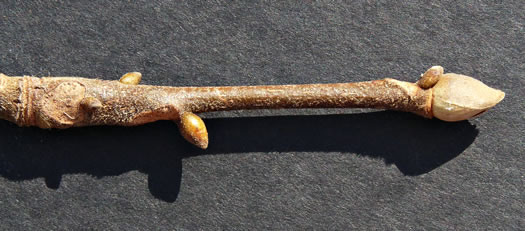
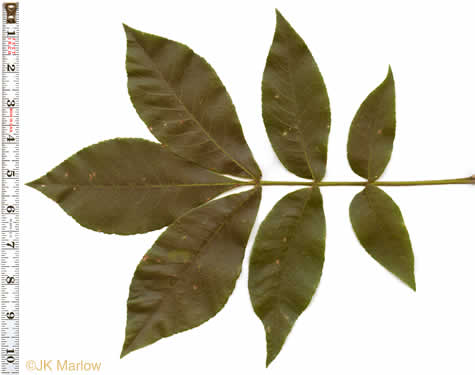
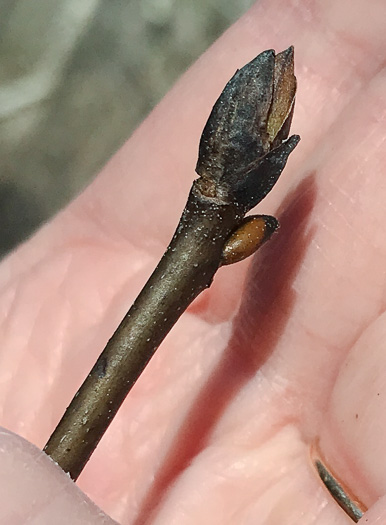
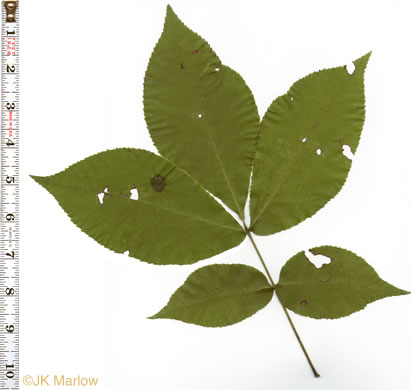
bitternut hickory (Carya cordiformis),
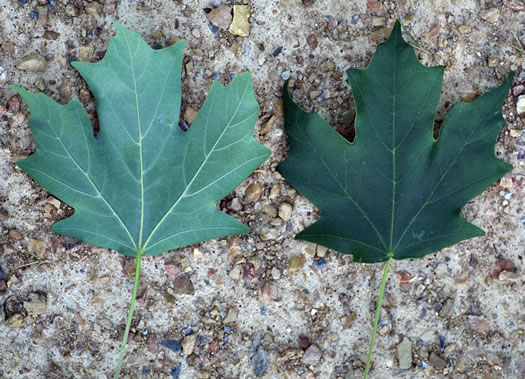
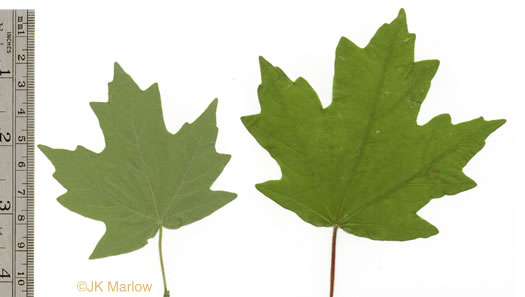
southern sugar maple (Acer barbatum),
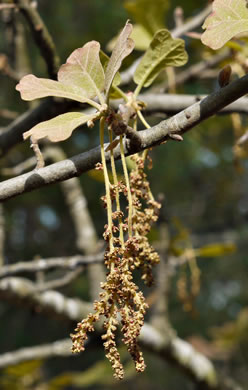
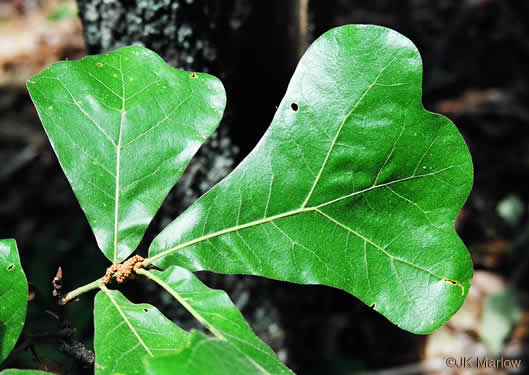
swamp chestnut oak (Quercus michauxii),
northern red oak (Q. rubra),
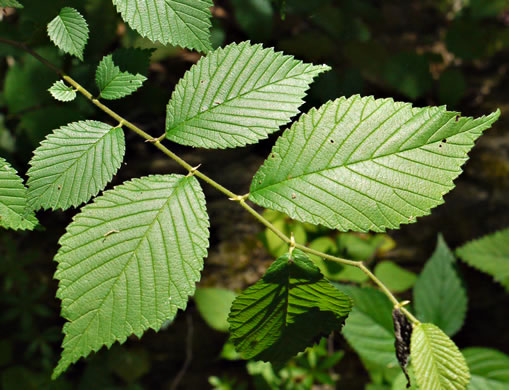
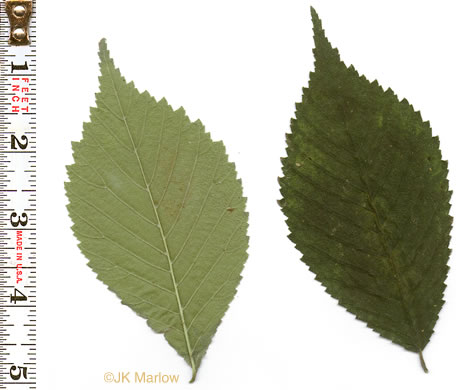
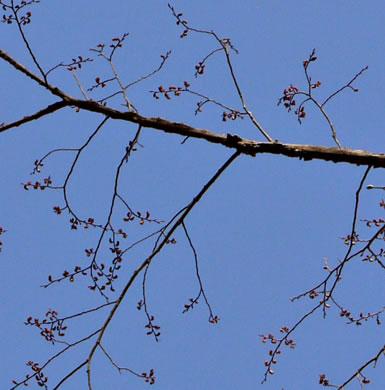
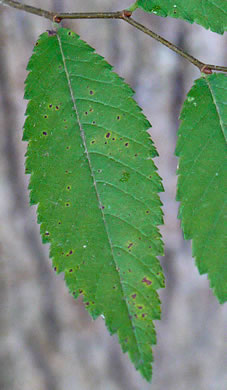
slippery elm (Ulmus rubra),
hackberry (Celtis laevigata),
shagbark hickory (C. ovata),
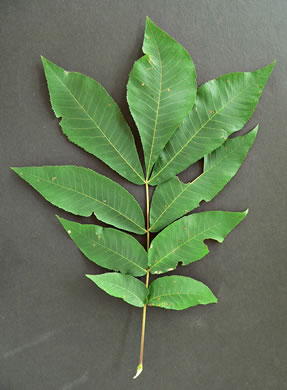
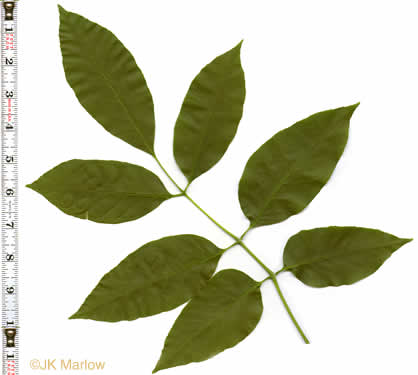
black walnut (Juglans nigra),
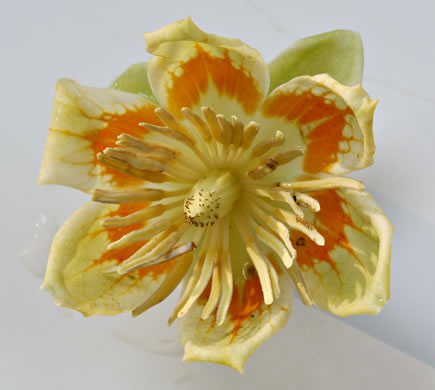
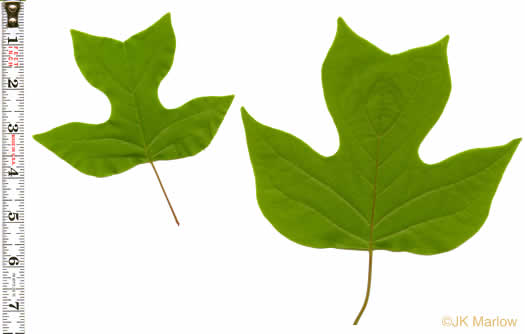
tulip tree (Liriodendron tulipifera),
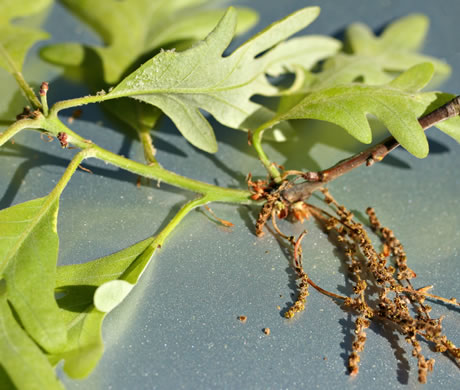
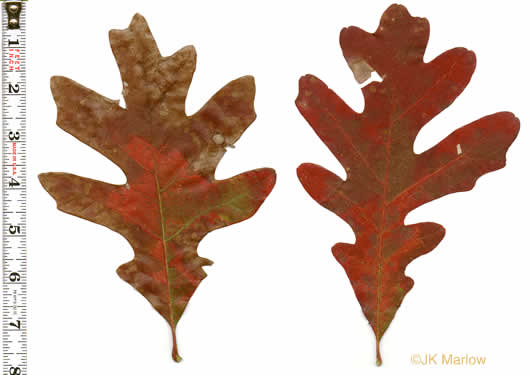
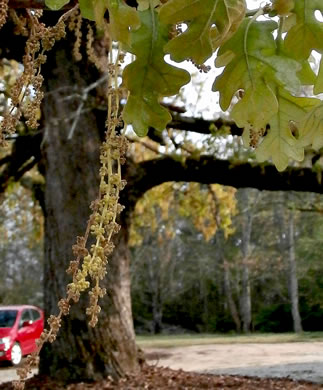
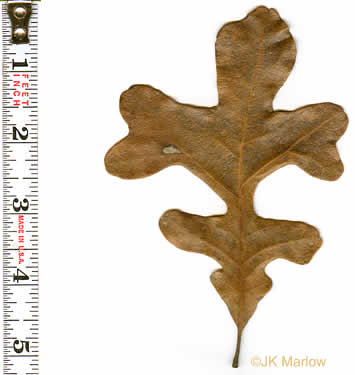
and white oak (Q. alba).
Swamp chestnut oak, sugarberry, and walnut are all bottomland species, and slippery elm is well known as a calcium-loving tree. Less mesic sites tend to be dominated by white oak, with southern sugar maple and bottomland species as important associates. American beech is usually present but not an important contributor to the canopy.
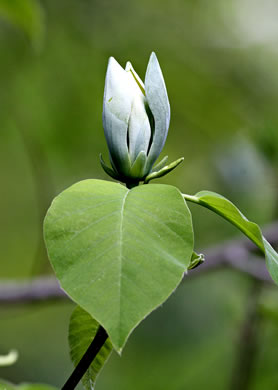
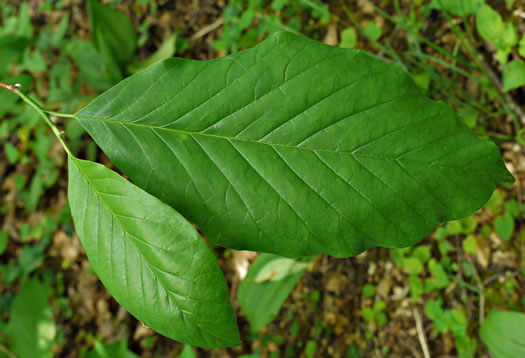
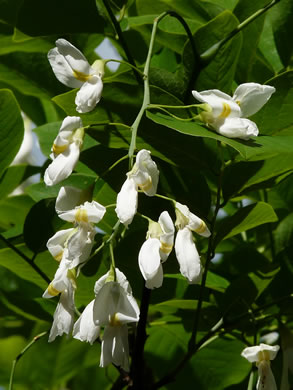
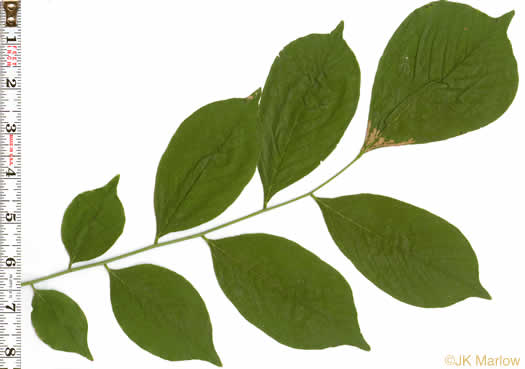
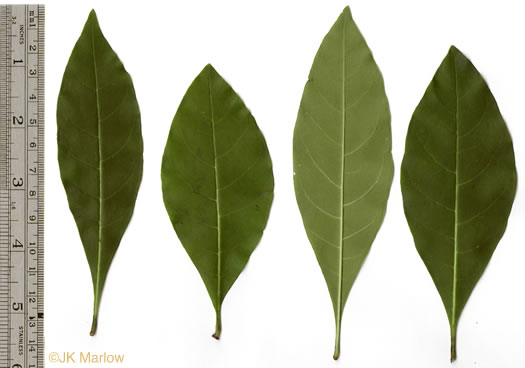
The understory in basic-mesic forests always includes such trees as dogwood, sourwood, red maple, and American holly, but the abundance of ironwood (Carpinus caroliniana), a species more typical of bottomlands, and hop hornbeam (Ostrya virginiana) distinctively characterize this community. Yellowwood (Cladrastis kentukea) is a rare mountain disjunct found in some basic-mesic forests, and cucumber-tree (Magnolia acuminata) is a spectacular flowering tree.
Shrub diversity is high, and typical species include
wild allspice (Lindera benzoin),
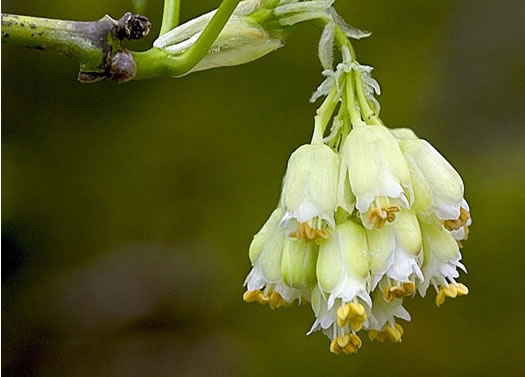
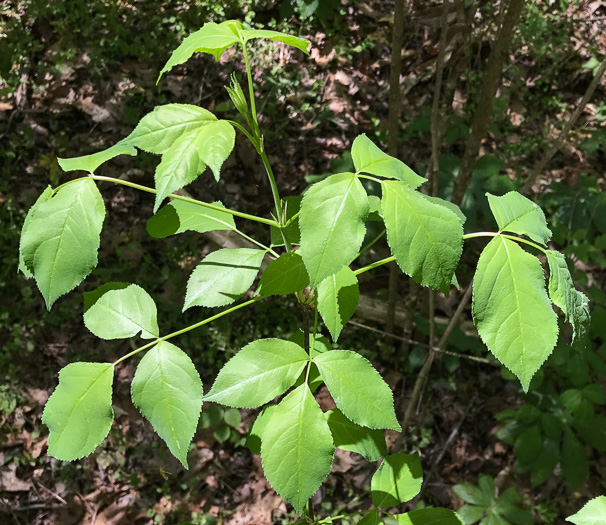
bladdernut (Staphylea trifolia),
painted buckeye (Aesculus sylvatica),
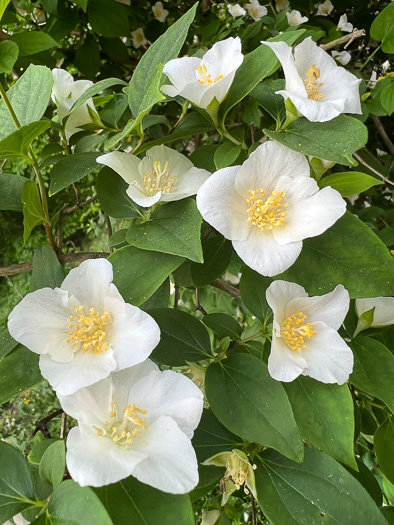
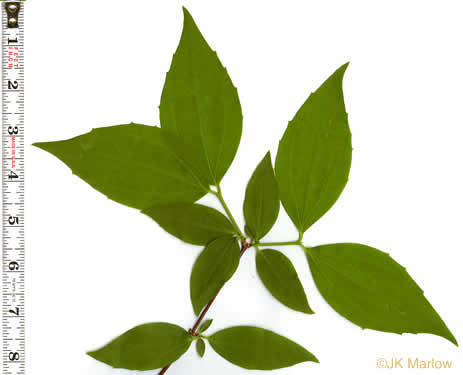
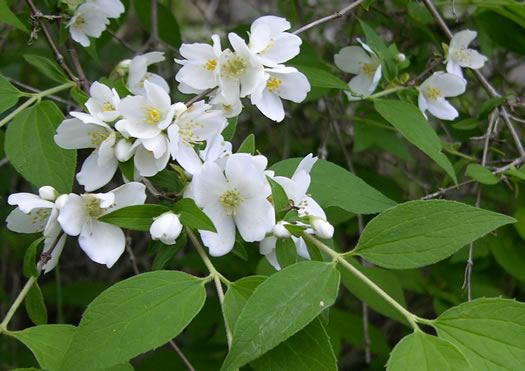
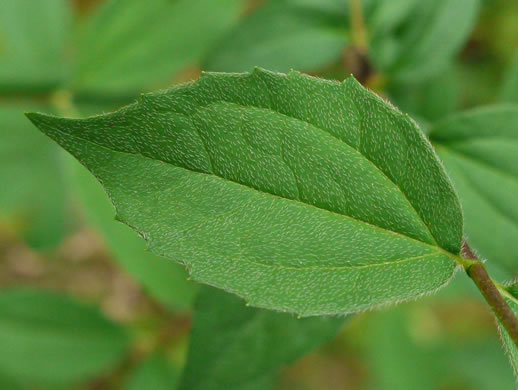
mock-oranges (Philadelphus inodorus and P. hirsutus),
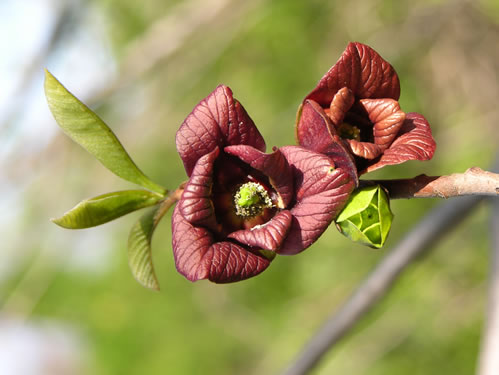
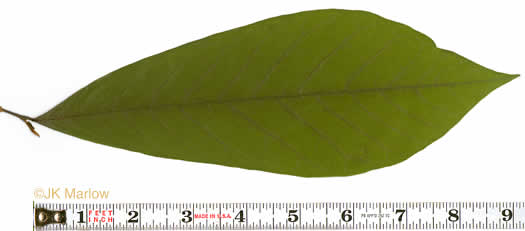
pawpaw (Asimina triloba),
and a host of additional shrubs typical of beech forests and oak-hickory forests in the piedmont.
At least one of the following rare shrubs are present:
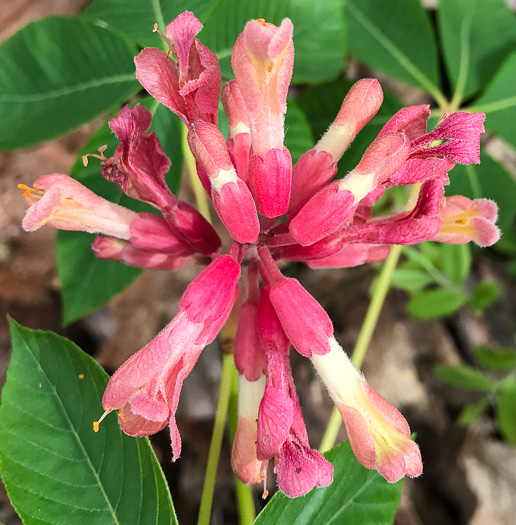
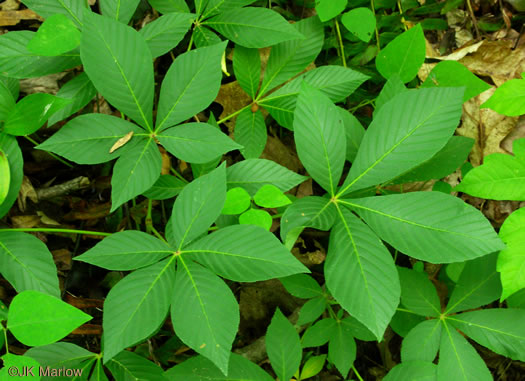
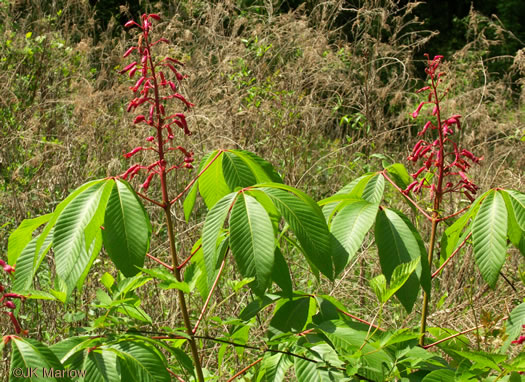
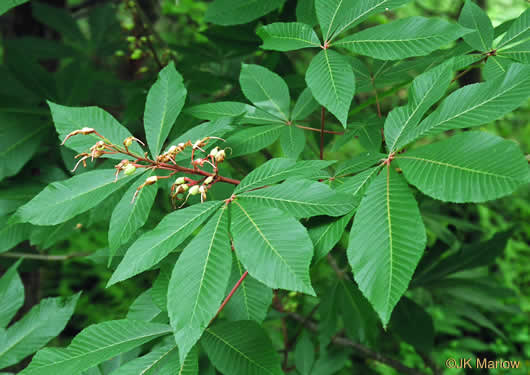
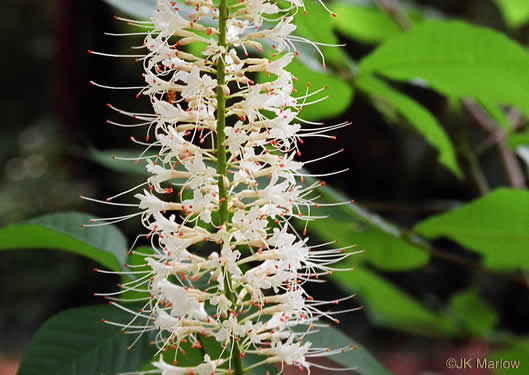
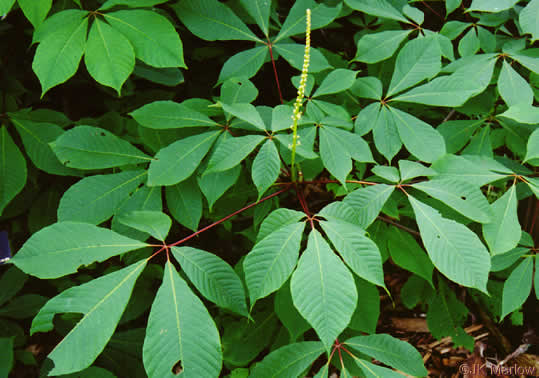
bottlebrush buckeye (Aesculus parviflora),
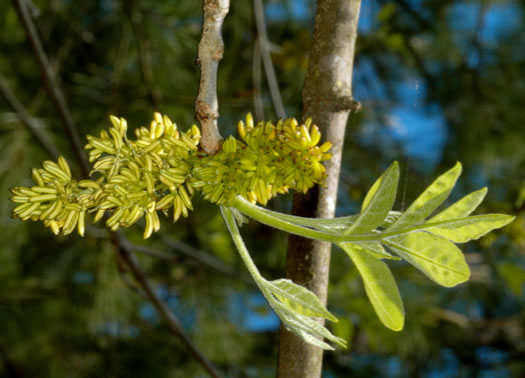
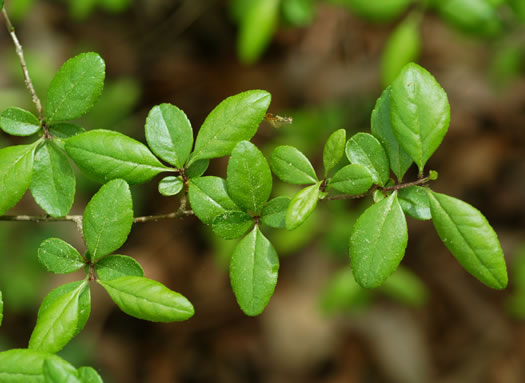
upland swamp privet (Forestiera ligustrina),
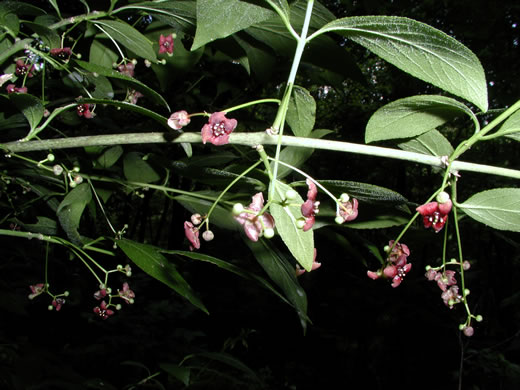
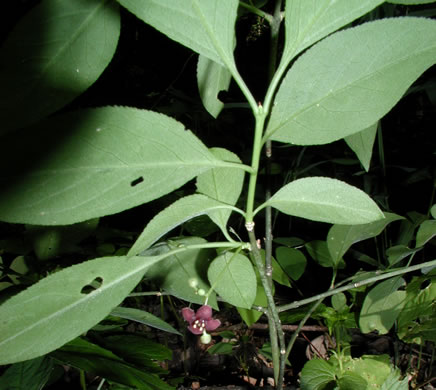
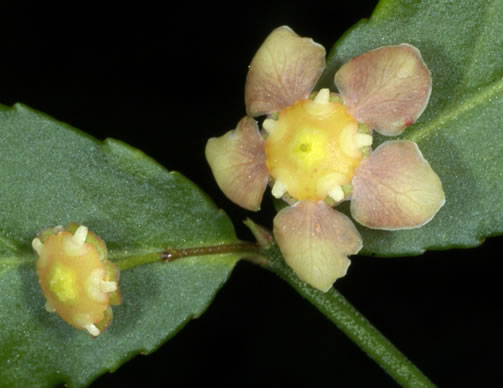
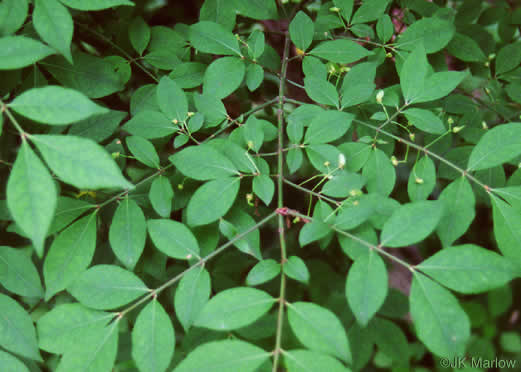
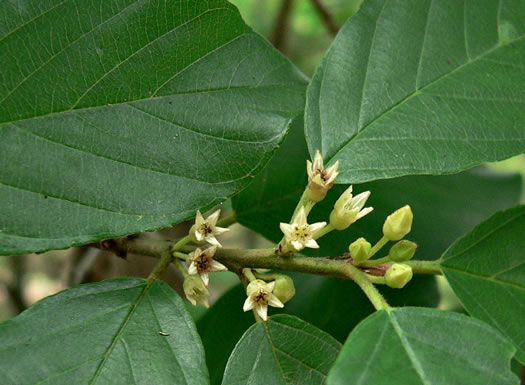
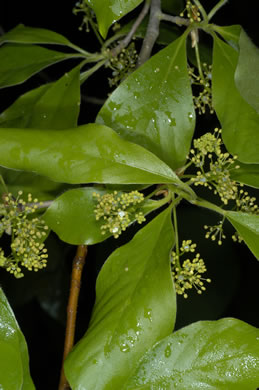
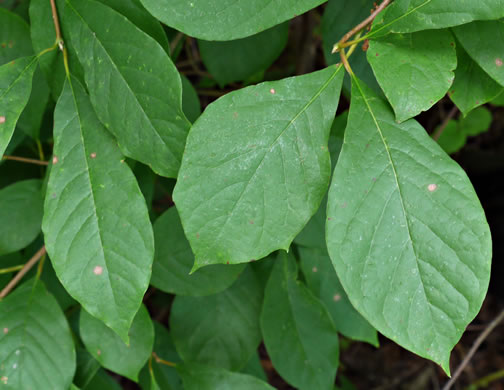
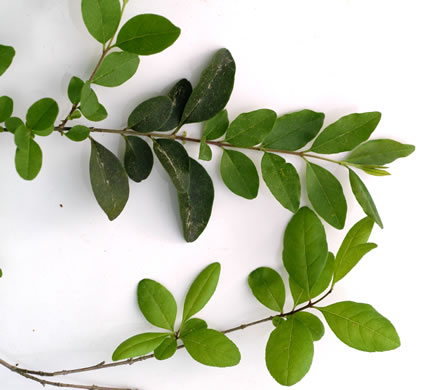
and wahoo (Euonymus atropurpureus),
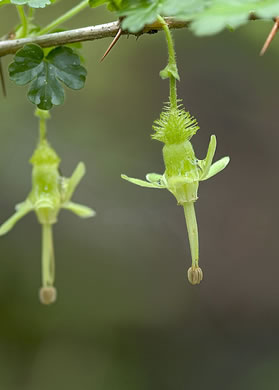
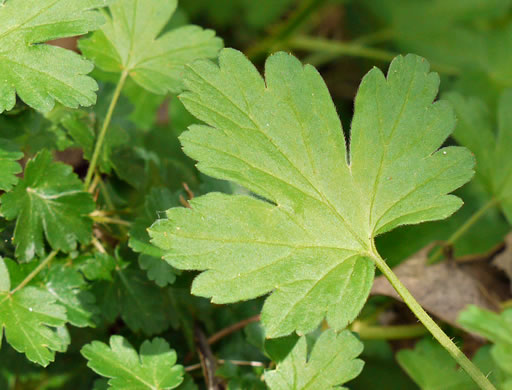
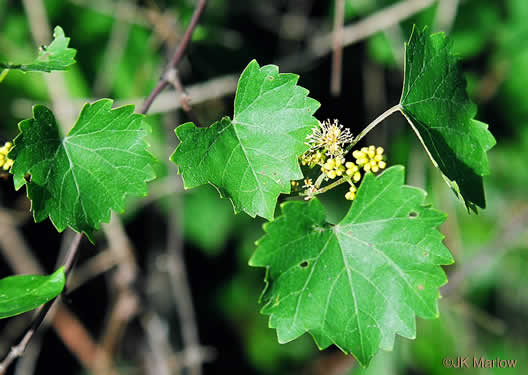
but seldom do more than two of these rarities occur at any one site. The presence of wahoo on upland sites is usually a good indicator of this community type. The Stevens Creek Heritage Preserve harbors one of only three populations in the world of Miccosukee gooseberry (Ribes echinellum).
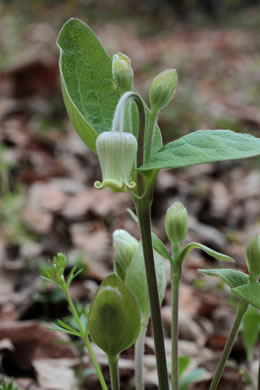
The herbaceous layer is a distinctive characteristic of basic-mesic forests. Some herbaceous plants are disjunct from the mountains, some are typical of rich bottomlands, and some are found only in this community. Rare mountain disjuncts include
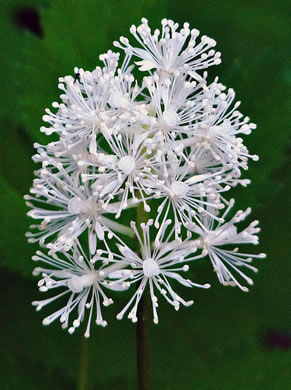
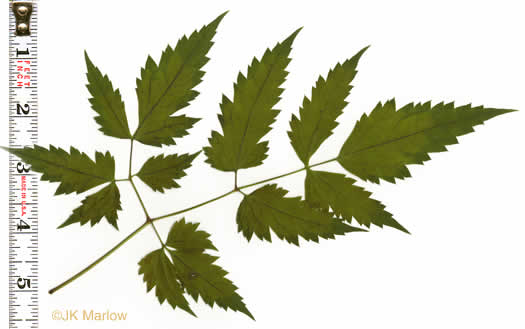
doll's-eyes (Actaea pachypoda),
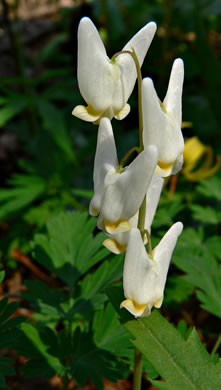
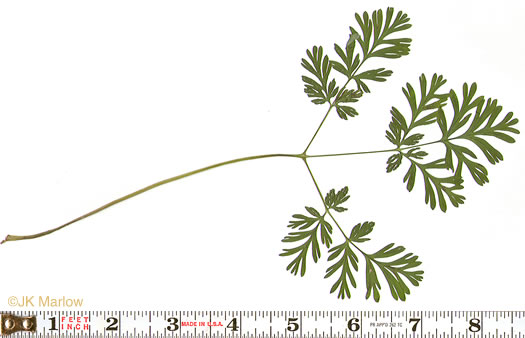
Dutchman's breeches (Dicentra cucullaria),
ginseng (Panax quinquefolius),
spreading bladder fern (Cystopteris protrusa),
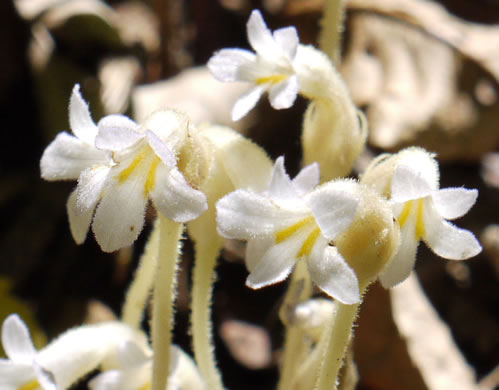
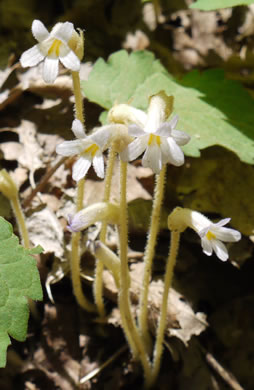
cancer-root (Orobanche uniflora),
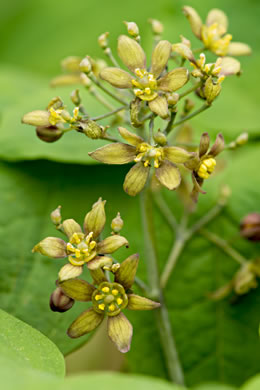
blue cohosh (Caulophyllum thalictroides),
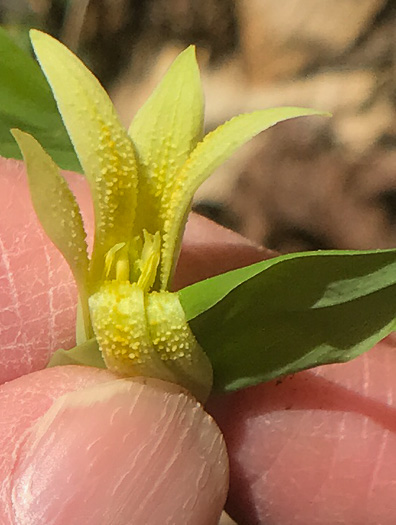
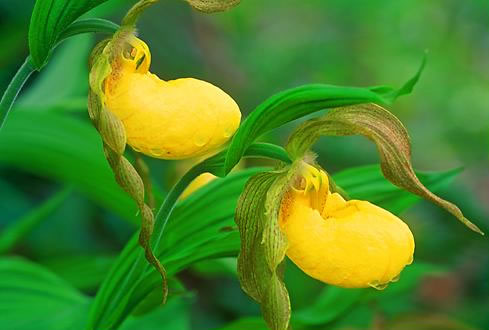
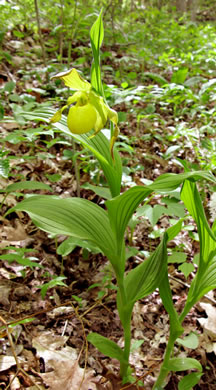
yellow lady’s slipper (Cypripedium calceolus var. pubescens),
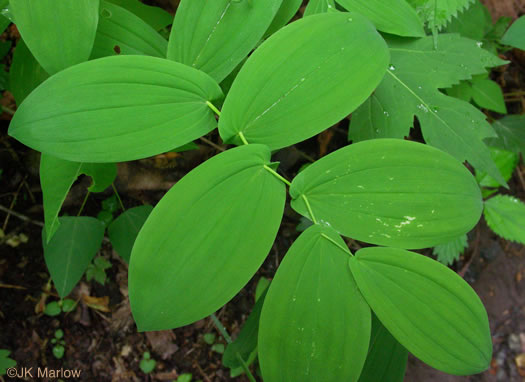
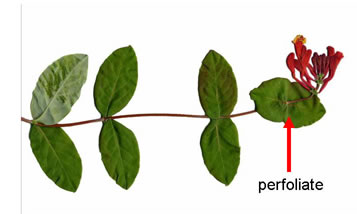
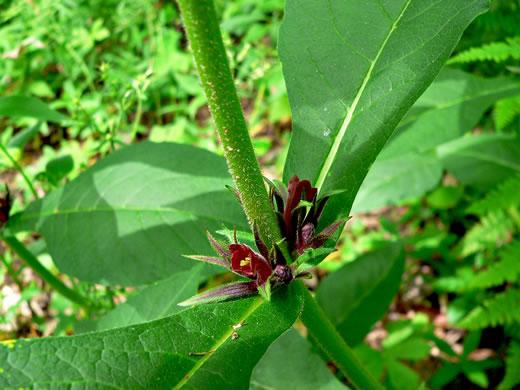
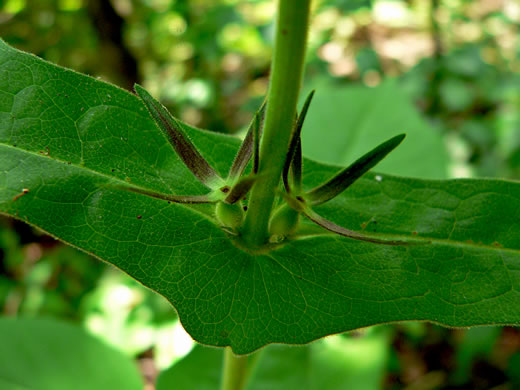
and perfoliate tinkers-weed (Triosteum perfoliatum).
Species that are distinctive to basic-mesic forests include
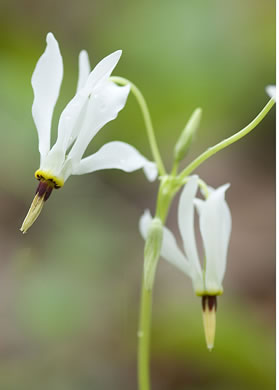
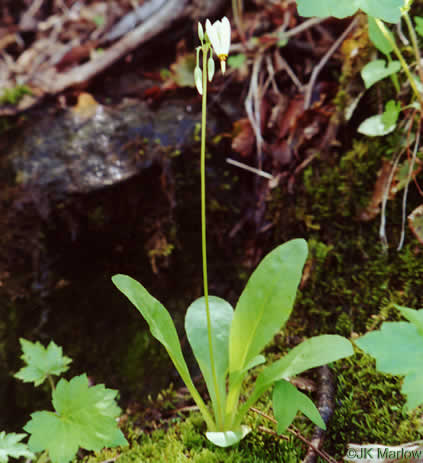
shooting star (Dodecatheon meadia),
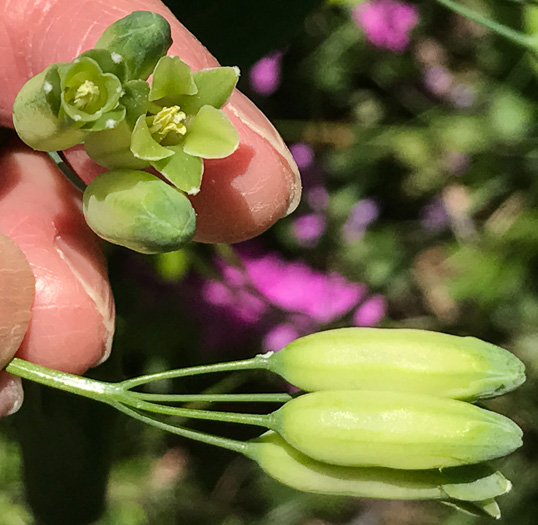
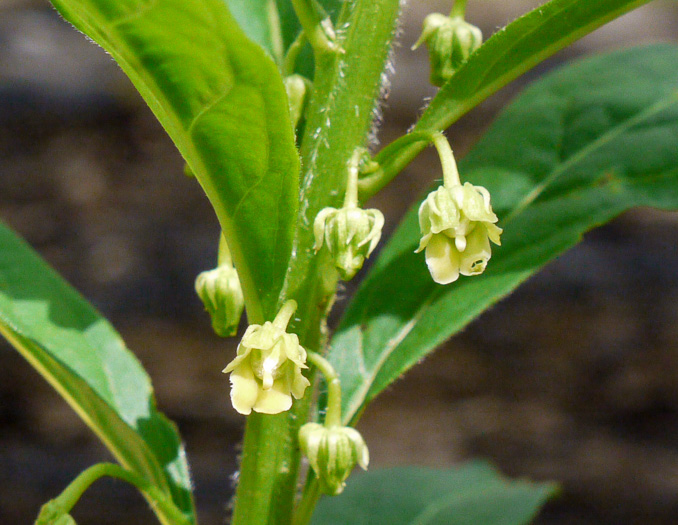
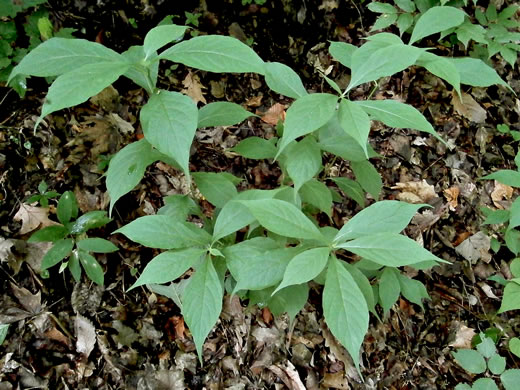
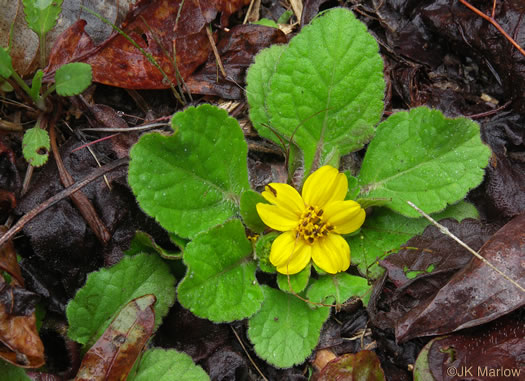
green violet (Hybanthus concolor),
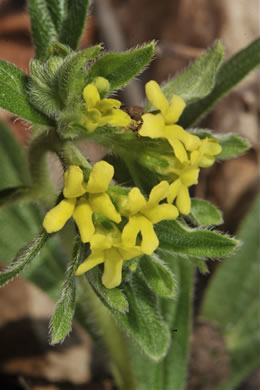
and southern stoneseed (Lithospermum tuberosum).
Species that are more typical of rich bottomlands include
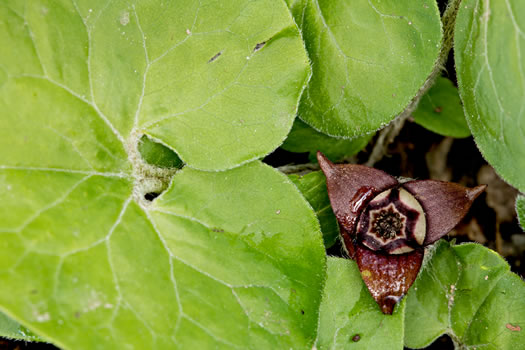
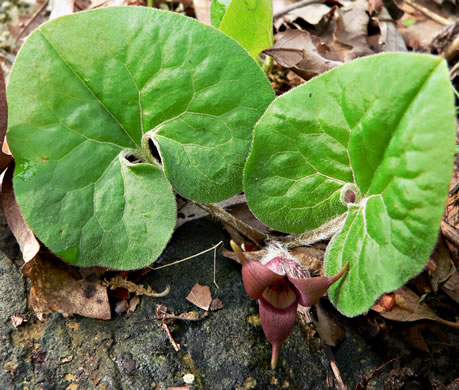
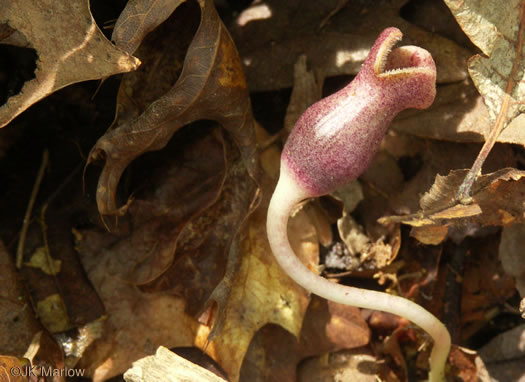
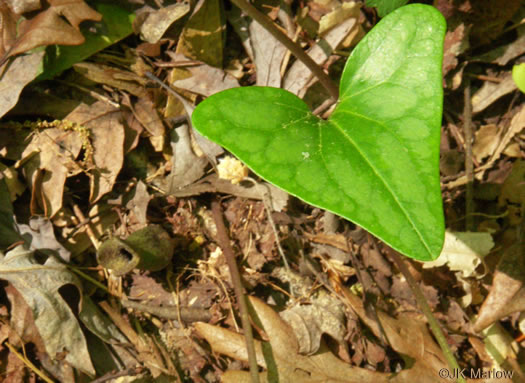
wild ginger (Asarum canadense),
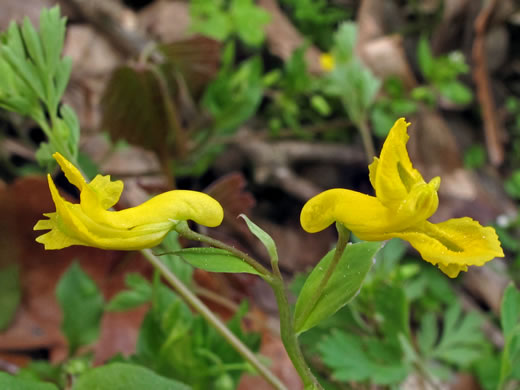
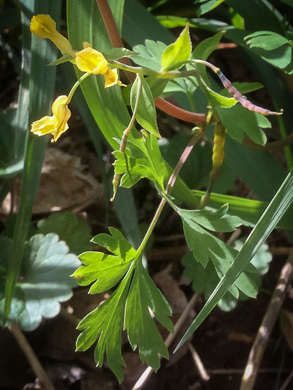
yellow fumewort (Corydalis flavula),
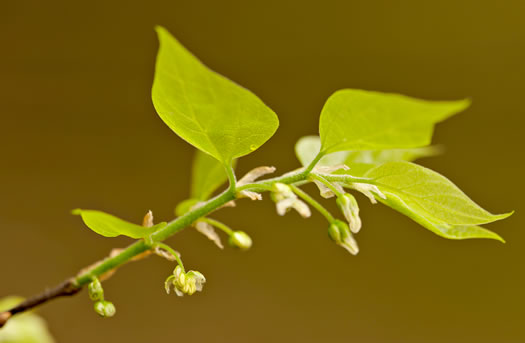
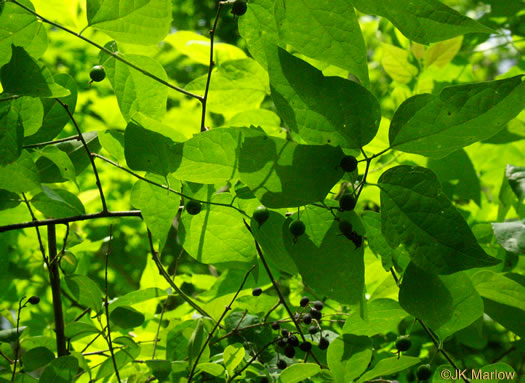
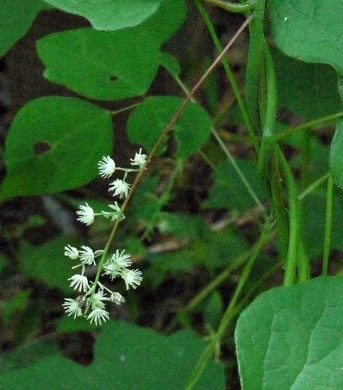
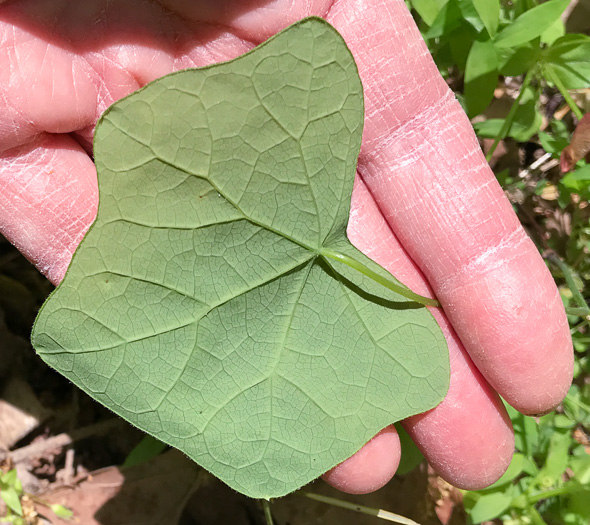
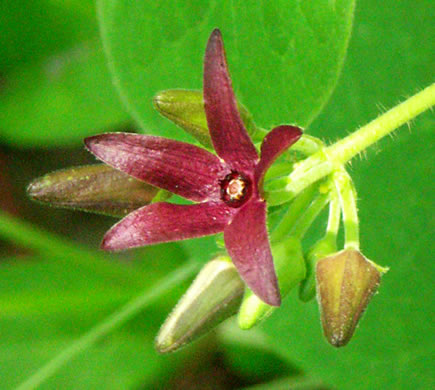
and moonseed (Menispermum canadense).
Additional rare herbaceous species, often restricted to just a few sites, include
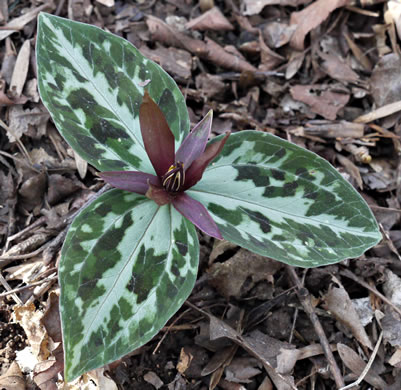
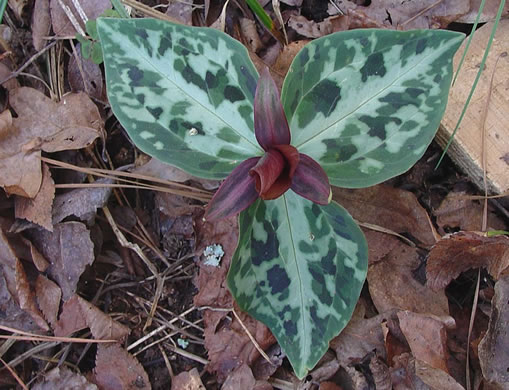
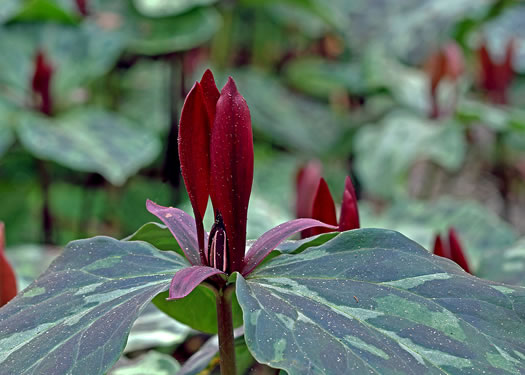
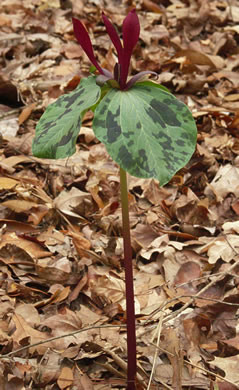
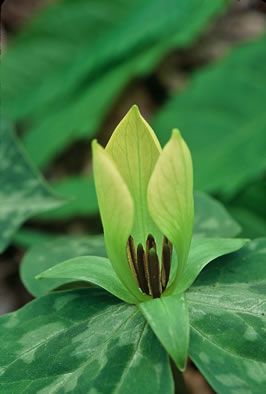
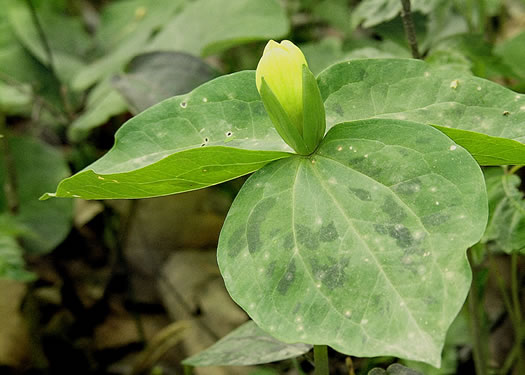
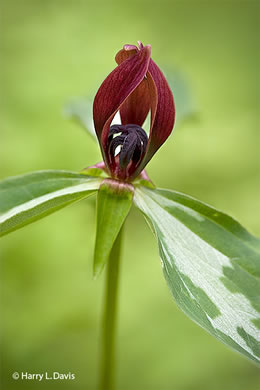
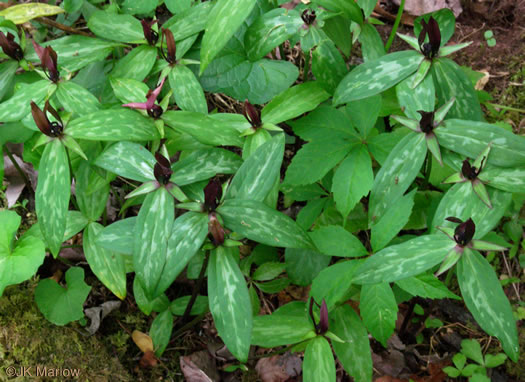
lanceleaf trillium (Trillium lancifolium),
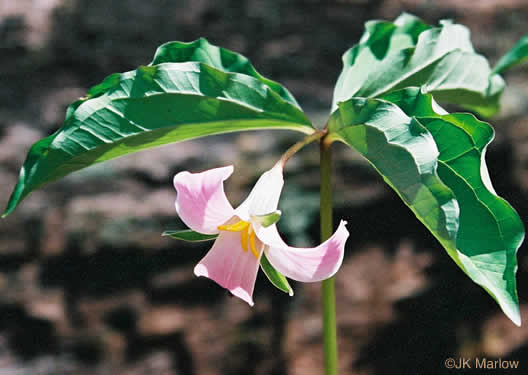
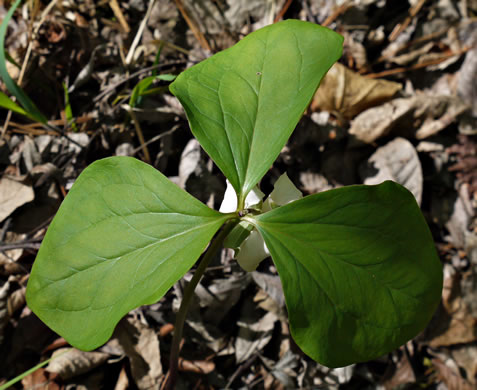
pale yellow trillium (T. discolor),
relict trillium (T. reliquum),
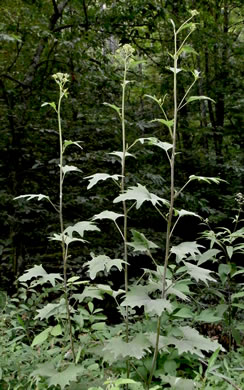
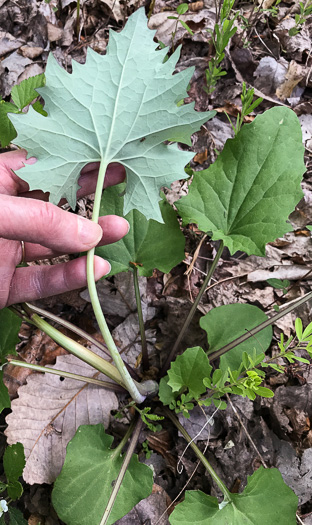
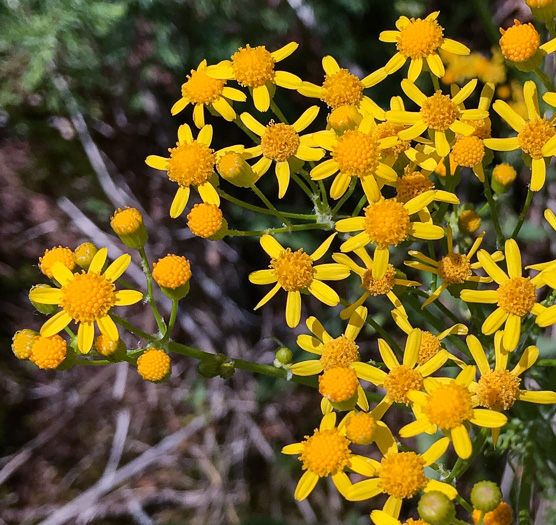
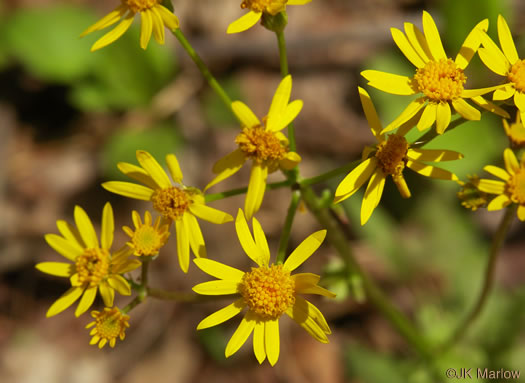
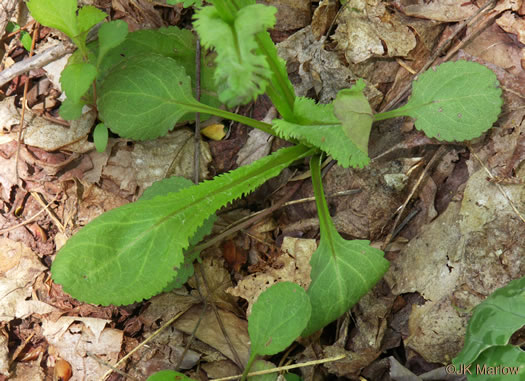
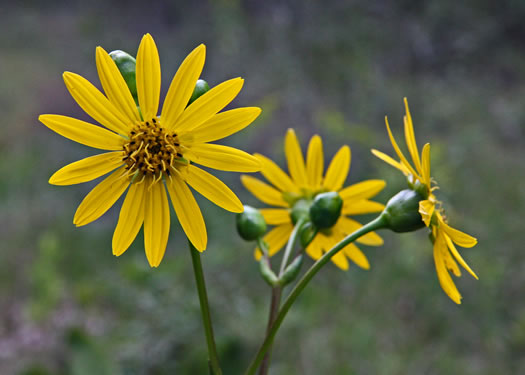
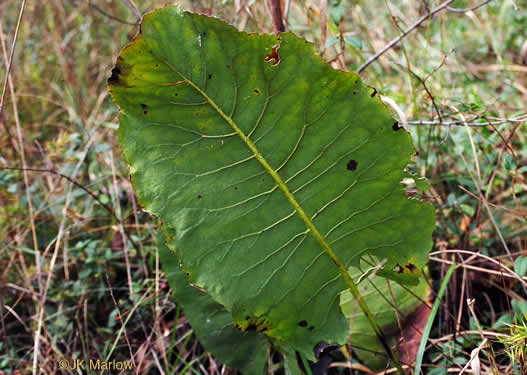
roundleaf ragwort (Senecio obovatus),
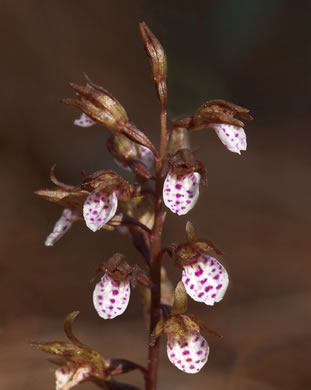
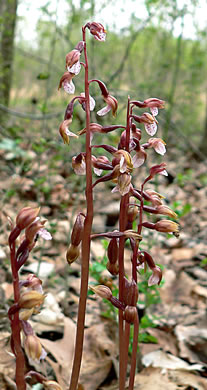
and spring coral-root (Corallorhiza wisteriana).
Additional interesting species include
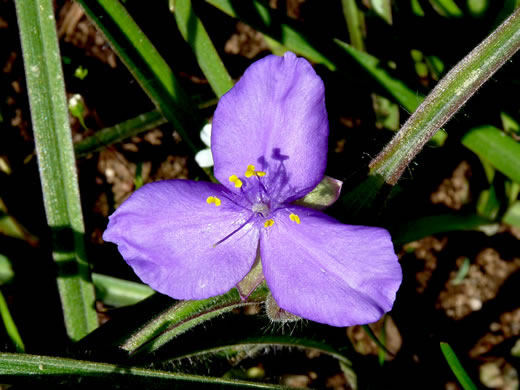
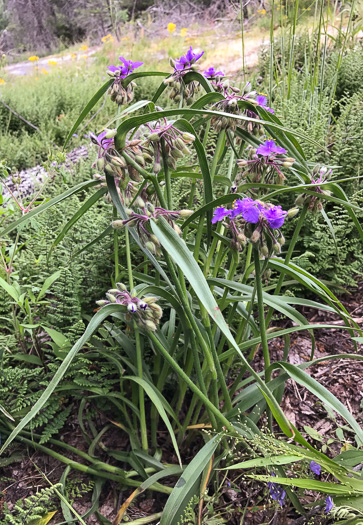
hairy spiderwort (Tradescantia hirsuticaulis),
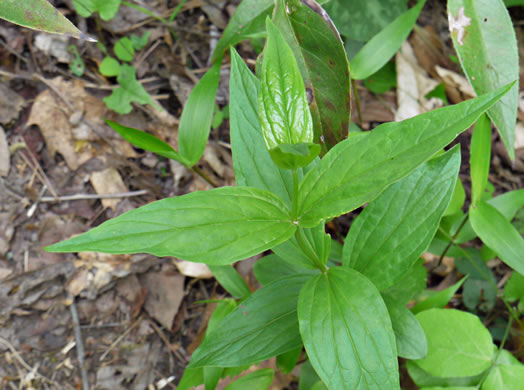
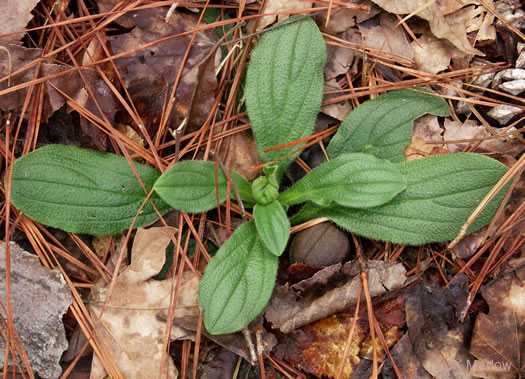
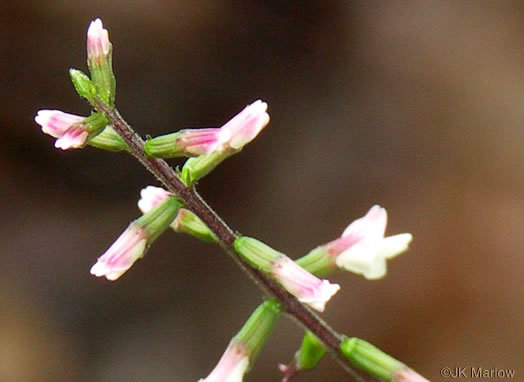
lopseed (Phryma leptostachya),
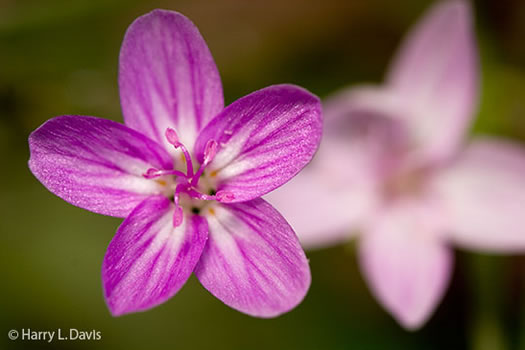
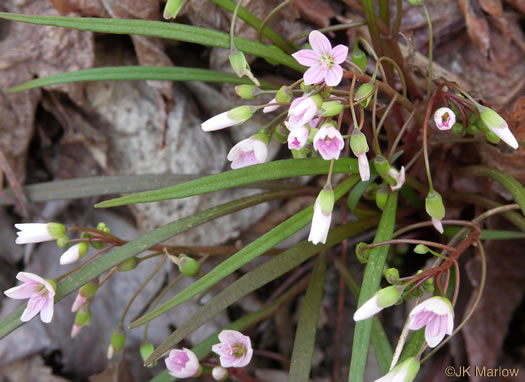
spring beauty (Claytonia virginica),
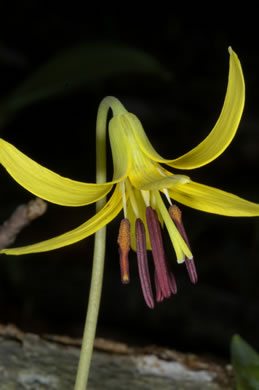
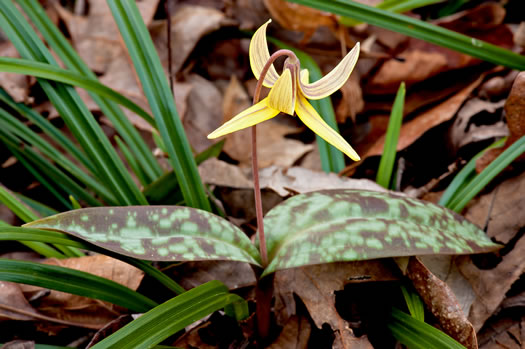
and dimpled trout lily (Erythronium umbilicatum subsp. umbilicatum).
In order to see all the unusual plants in bloom, the visitor to a basic-mesic forest site should plan on visiting a site several times between mid-March and late-June.
Beech forests
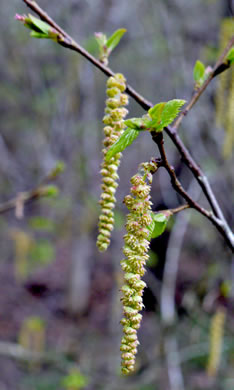
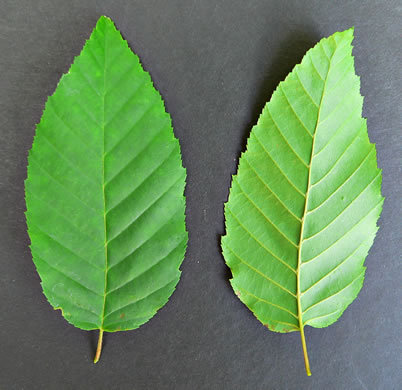
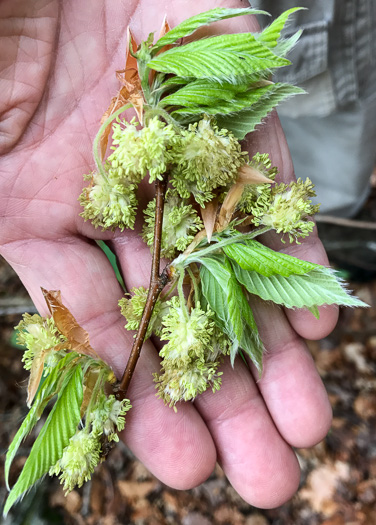
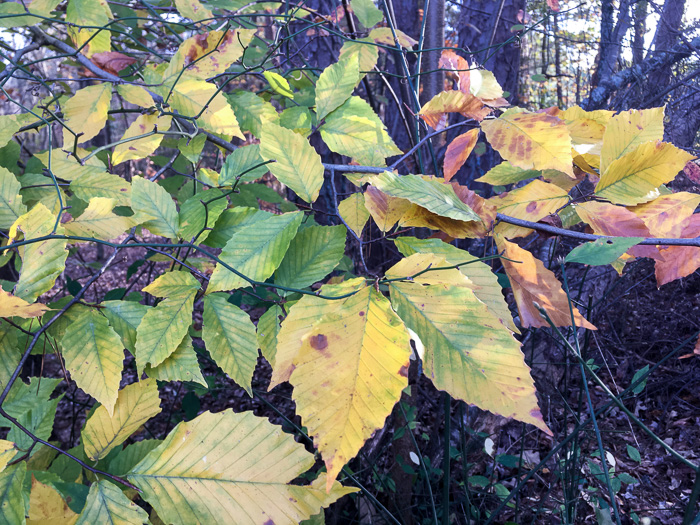
Beech forests, also known as mesic mixed hardwood forests, are restricted to the Piedmont Province and Coastal Plain Province. Steep, north-facing river bluffs and sheltered ravines are the locations where most beech forest communities occur. But they are also found in the coastal plain on the upland flats or on islands surrounded by swamp. Associated rocks and soils in the piedmont are acidic. In the coastal plain, they may be either acidic or circumneutral (i.e.. calcium-rich). This wildflower community is easily recognized by the abundance of beech (Fagus grandifolia). Canopy dominants also include
tulip tree,
red maple,
shagbark hickory (Carya ovata),
and northern red oak (Quercus rubra).
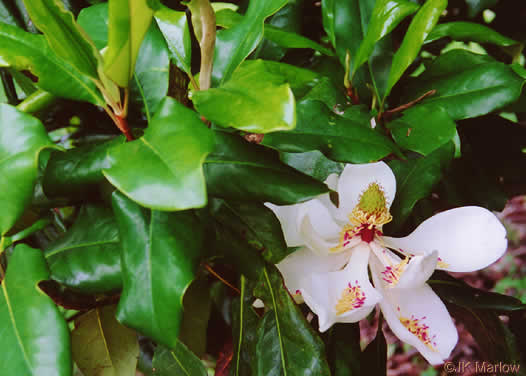
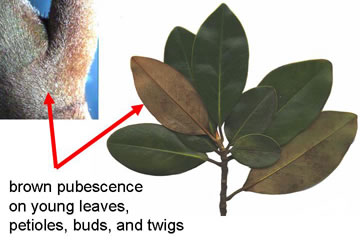
The general paucity of other oak species is one of the defining characteristics of this community. Southern sugar maple (Acer barbatum) and sweet gum, and sometimes bull bay (Magnolia grandiflora), may also be important canopy trees in the coastal plain. Many of the same understory trees that are present in beech forests also occur in oak-hickory forests, including dogwood, sourwood, and American holly, but in the piedmont, hop hornbeam often is abundant. Swamp red bay (Persea palustris) is often present in beech forests in the coastal plain.
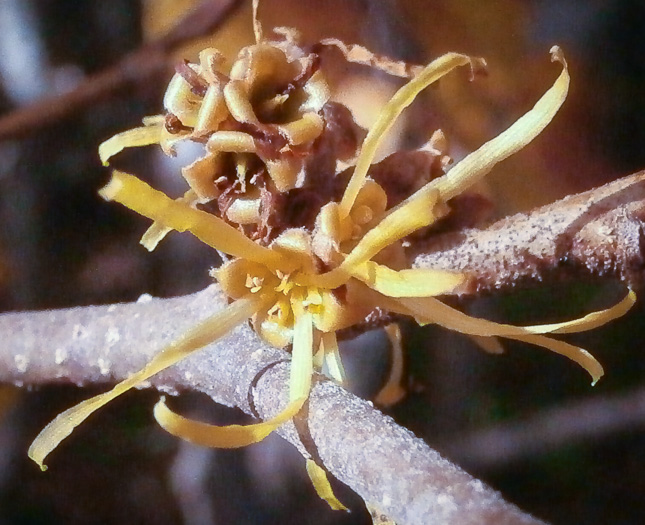
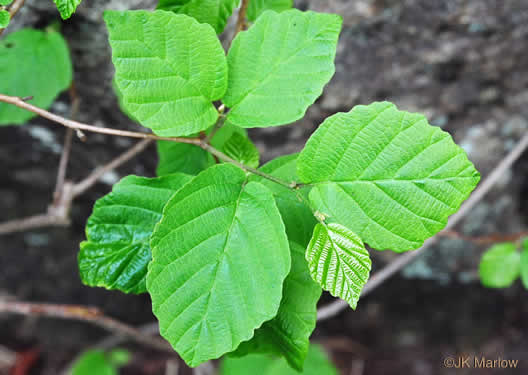
Common shrubs include strawberry-bush (Euonymus americanus) and species of blueberry (Vaccinium spp.). Small amounts of mountain laurel are present in the piedmont, and witch-hazel (Hamamelis virginiana) and horse sugar are usually present in the coastal plain. The herbaceous layer is sparse to moderate in density and diversity. In the piedmont, herb density and diversity in beech forests are intermediate between basic-mesic forests and oak-hickory forests. In the coastal plain, beech forests are the richest upland community. Abundant and attractive species include
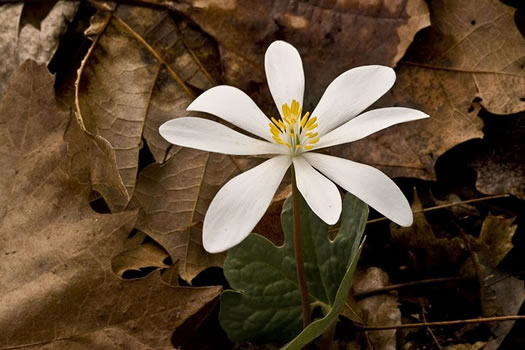
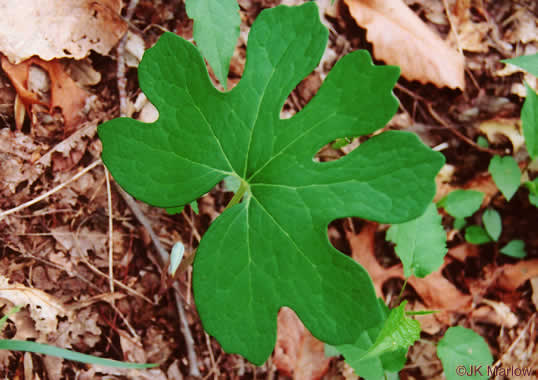
bloodroot (Sanguinaria canadensis),
may-apple (Podophyllum peltatum),
bellwort (Uvularia perfoliata),
various trilliums (mottled trillium, Trillium maculatum, in the coastal plain
and Catesby’s trillium, T. catesbaei, in the piedmont),
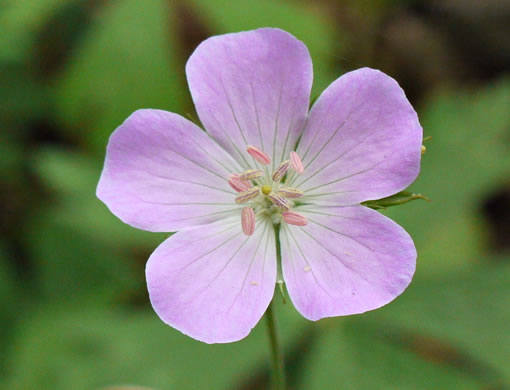
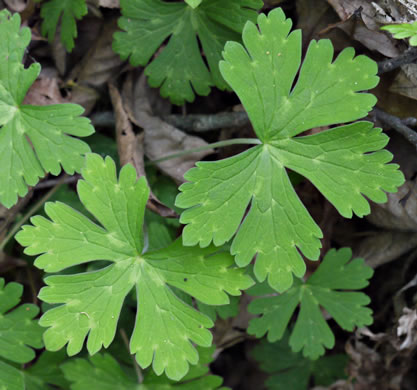
wild geranium (Geranium maculatum),
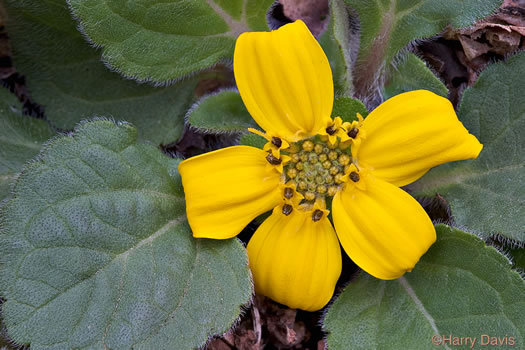
and green-and-gold (Chrysogonum virginianum var. australe).
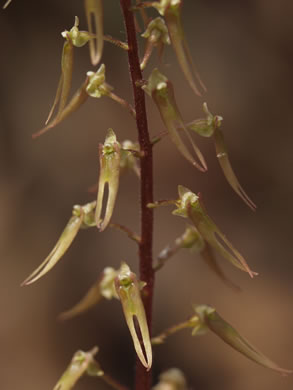
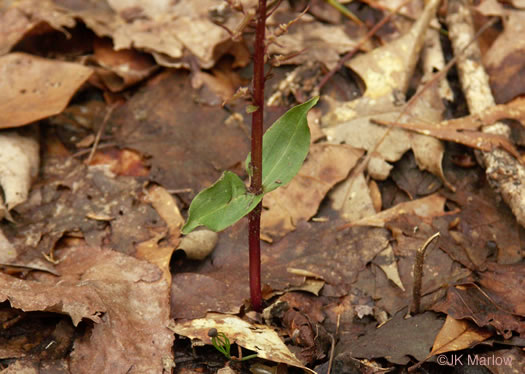
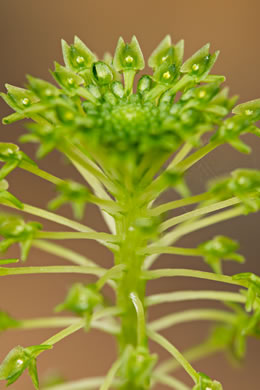
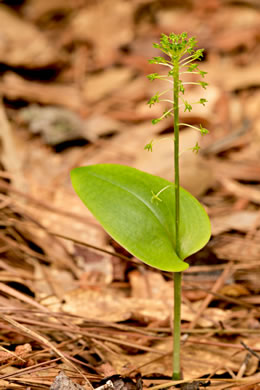
Green adder’s mouth (Malaxis unifolia) and southern twayblade (Listera australis) are rarities that are commonly found in beech forests in the coastal plain.
Oak-hickory forests
This is a complex community that is found in the lower mountains, piedmont, and coastal plain. It is difficult to characterize, with much variation among sites. Oak-hickory forests may be dominated by a surprising variety of canopy species, especially oaks. Considerable variation also exists in the understory, shrub, and especially in the herbaceous layer. Despite the site-to-site variation between physiographic provinces, there are unifying characteristics.
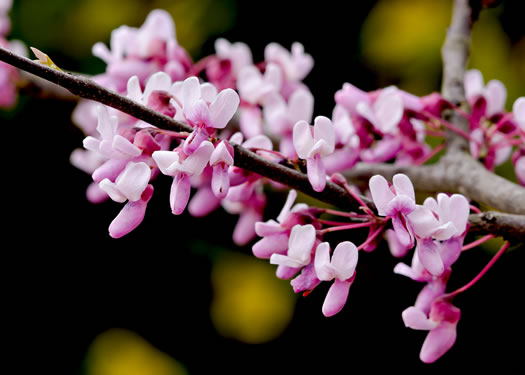
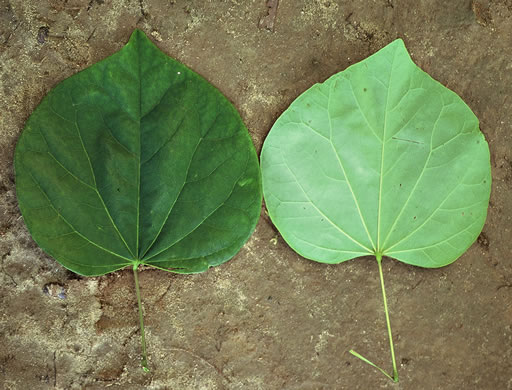
Oak-hickory forests are always associated with acid soils and are neither the most mesic nor the driest community in any region. Depending on elevation, aspect, and topography, an oak-hickory forest may occur on ridge tops, upper slopes, or midslopes. Occasionally, it occurs on upland flats. Although canopy dominants can vary considerably, white oak is found on most sites and is either dominant or codominant. Mockernut hickory (Carya tomentosa) or pignut hickory (C. glabra) is common. Southern red oak is found on drier sites, and tulip tree is usually present on mesic sites. Sourwood, black gum (Nyssa sylvatica), dogwood, and red maple are present in the subcanopy with the former two species more abundant on drier sites and the latter two more abundant on more mesic sites. American holly and redbud (Cercis canadensis) also are abundant subcanopy trees on more mesic sites. On all but the driest sites, red maple becomes more abundant when there has been site disturbance.
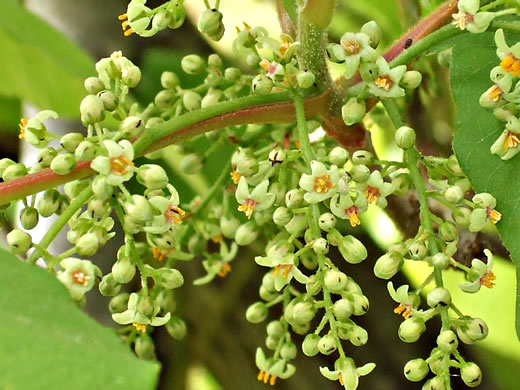
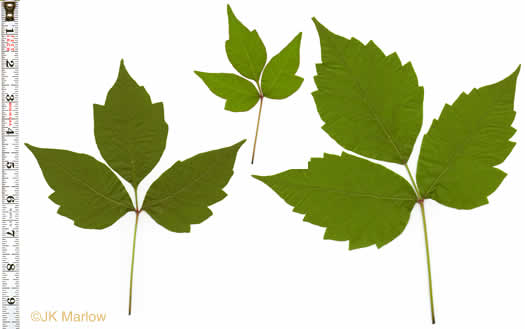
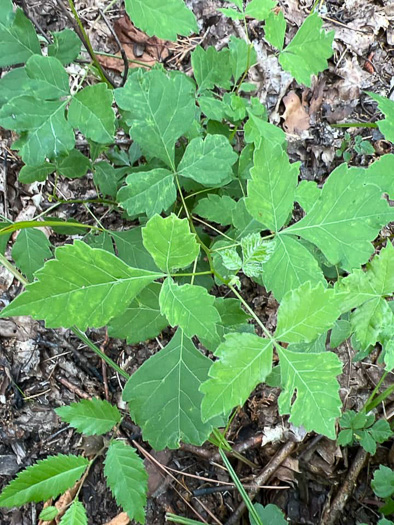
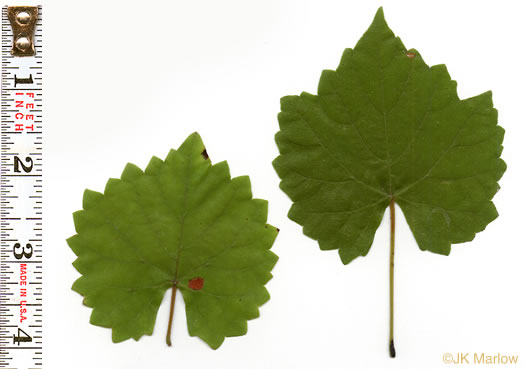
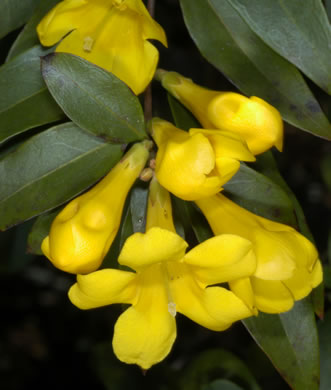
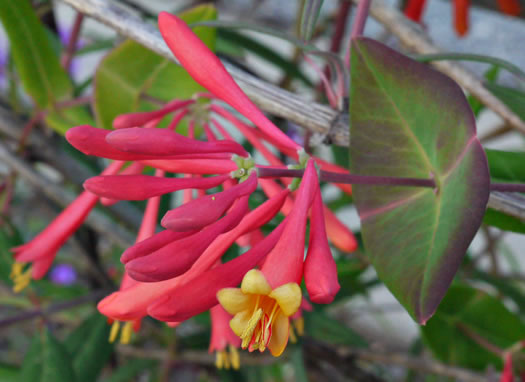
Shrubs common throughout this community include various species of blueberry, including dryland blueberry (Vaccinium vacillans) and common deerberry (V. stamineum var. stamineum). Vines include muscadine (Vitis rotundifolia), coral honeysuckle (Lonicera sempervirens), and poison ivy (Rhus radicans). In drier sites, New Jersey tea (Ceanothus americanus), Carolina jessamine (Gelsemium sempervirens), and sparkleberry (Vaccinium arboreum) are common. In more mesic sites, strawberry-bush (Euonymus americanus) and various buckeyes are abundant, including red buckeye (Aesculus pavia) in the coastal plain and painted buckeye (A. sylvatica) in the piedmont and mountains.
Herbaceous plant cover and diversity is generally sparse. Herbaceous species common throughout this community include
flowering spurge (Euphorbia corollata),
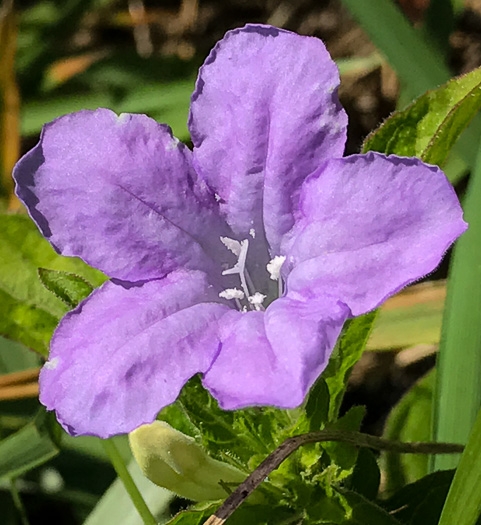
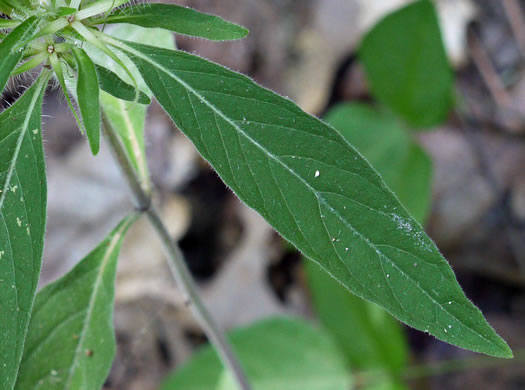
ruellia (Ruellia caroliniensis),
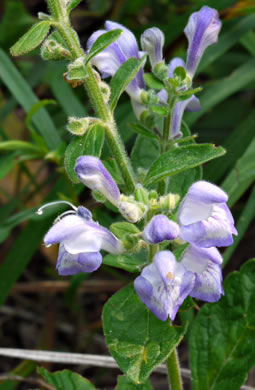
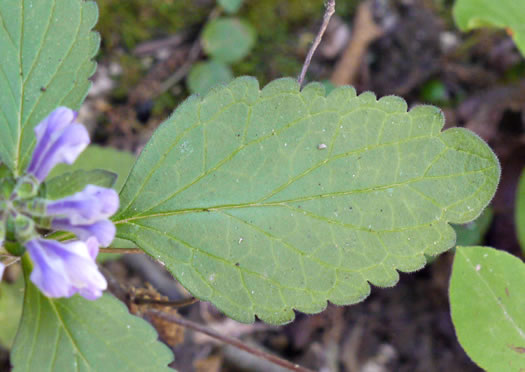
hairy skullcap (Scutellaria elliptica),
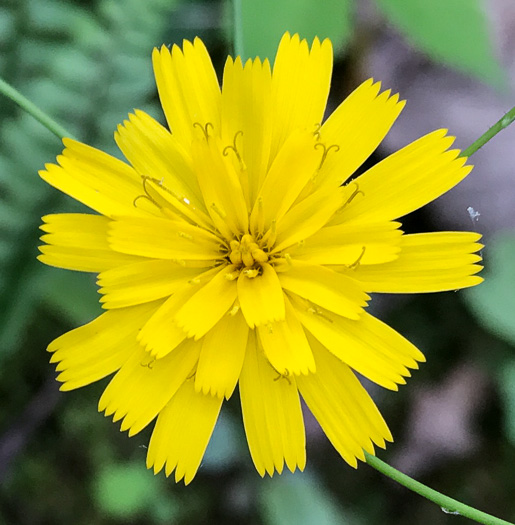
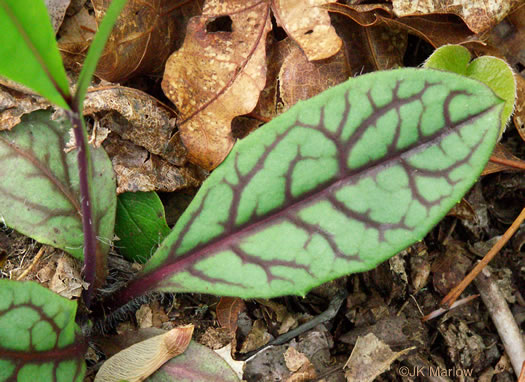
veiny hawkweed (Hieracium venosum),
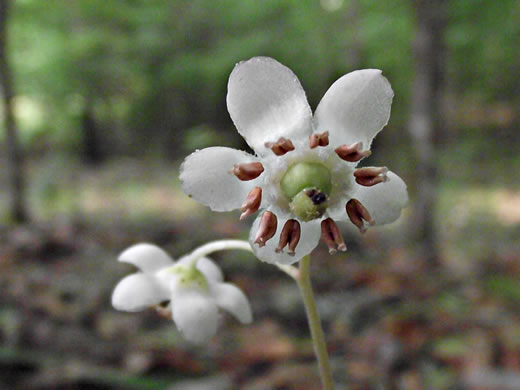
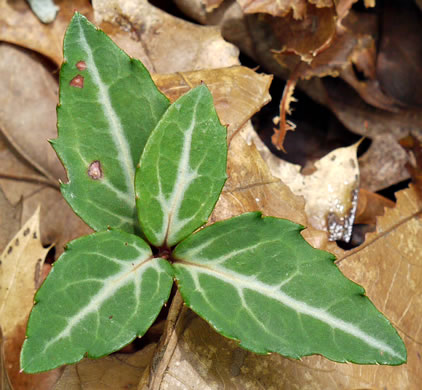
spotted wintergreen (Chimaphila maculata),
arrowleaf (Hexastylis arifolia),
and Appalachian oak-leach (Aureolaria laevigata).
Drier sites usually harbor
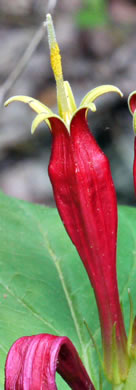
Indian pink (Spigelia marilandica),
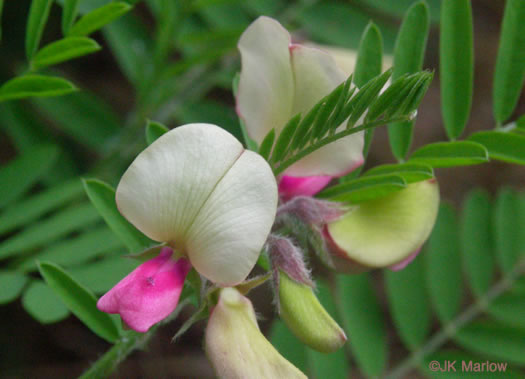
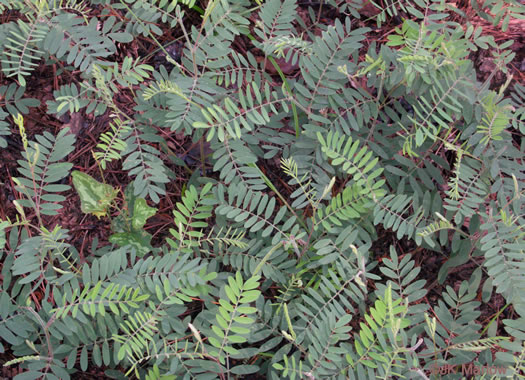
goat’s rue (Tephrosia virginiana),
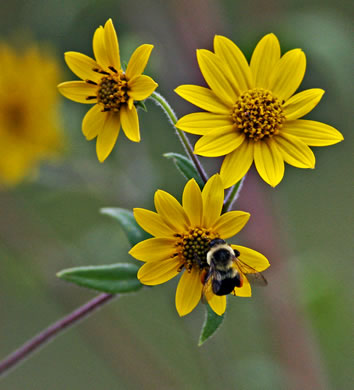
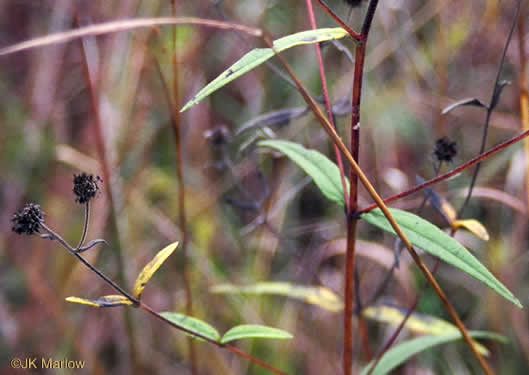
and whorled-leaf coreopsis (Coreopsis major).
More mesic sites inevitably harbor
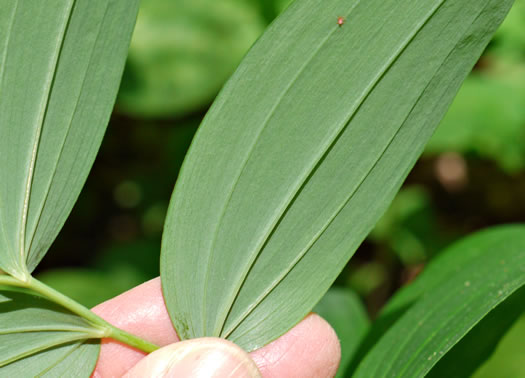
Solomons-seal (Polygonatum biflorum),
Catesby’s trillium (Trillium catesbaei),
and pale Indian-plantain (Arnoglossum atriplicifolium).
Oak-hickory forests were once the most abundant upland community in the piedmont. They were much less abundant in the coastal plain (because of the abundance of periodic fire) and the mountains (because of the abundance of more mesic and more xeric communities). Although still an abundant community, much of the original forests has been lost. Large, undisturbed stands are rare. Although small stands on steep slopes that show minimal disturbance remain common in the piedmont, stands that show no signs of past disturbance are rare. In the coastal plain, most oak-hickory forests have been disturbed, resulting in a dense subcanopy and shrub layer that makes ingress difficult, especially during the summer and fall. Oak-hickory forests are not hard to find in the low mountains since large acreages are in public ownership; however, sites with no disturbance are rare.
Piedmont xeric hardpan forests
This community has an impenetrable clay hardpan near the surface that inhibits infiltration of water and plant roots. This hardpan may also result from rock near the surface, but regardless of its origin, a very dry habitat is produced in the upland flats and gentle slopes of the piedmont, where it is typically found. The rock associated with this community type often is present as boulders that are usually gabbro, which is high in calcium-rich feldspars and weathers to produce a soil with a circumneutral pH.
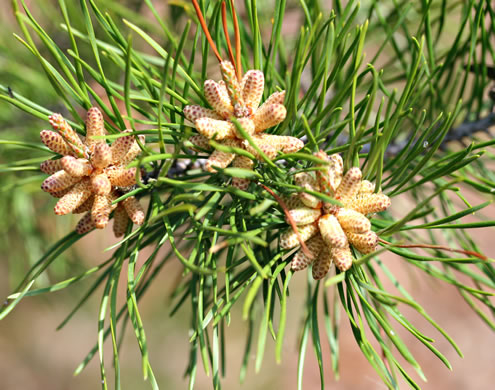
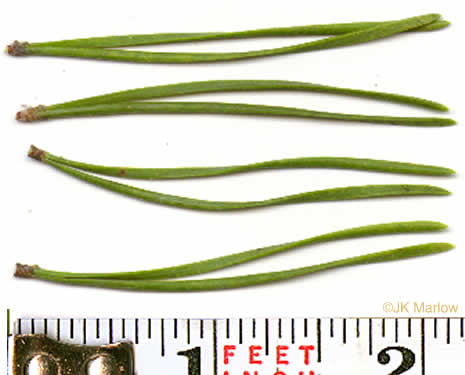
Stunted trees and a relatively open canopy are characteristic of this community. In undisturbed, old-growth sites, post oak (Quercus stellata) and blackjack oak (Q. marilandica) dominate the canopy, and eastern red cedar and redbud dominate the understory. On many sites it is often difficult to distinguish the canopy from the understory or subcanopy. Virginia pine (Pinus virginiana) and shortleaf pine may be important components of disturbed sites. Additional canopy species include
white oak (Q. alba),
American ash (Fraxinus americana),
a variety of other oaks,
pignut hickory (Carya glabra),
and the rare Carolina shagbark hickory (C. carolinae-septentrionalis).
Additional understory trees include
winged elm (Ulmus alata),
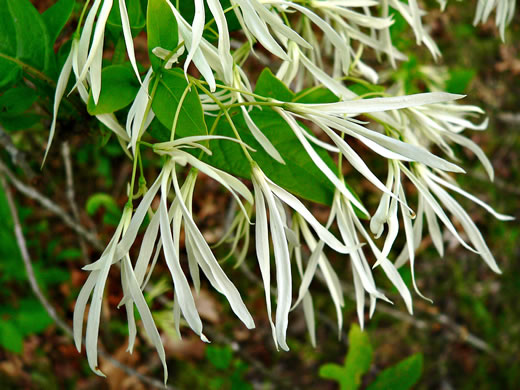
fringe-tree (Chionanthus virginicus),
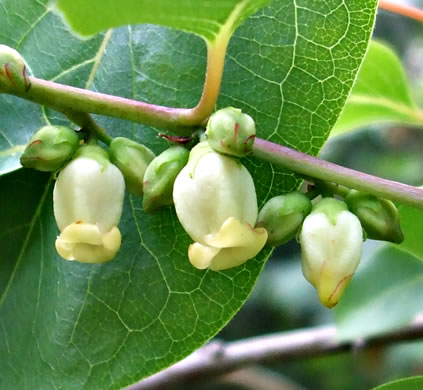
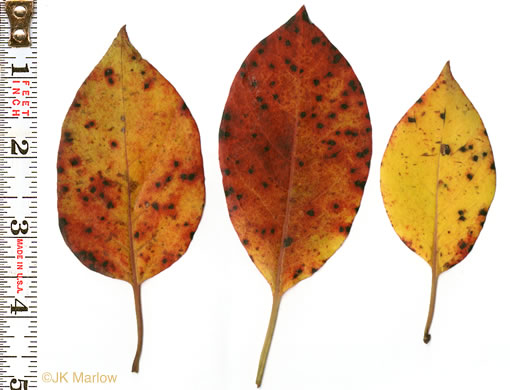
and persimmon (Diospyros virginiana).
Shrubs are not abundant, but
sparkleberry (Vaccinium arboreum),
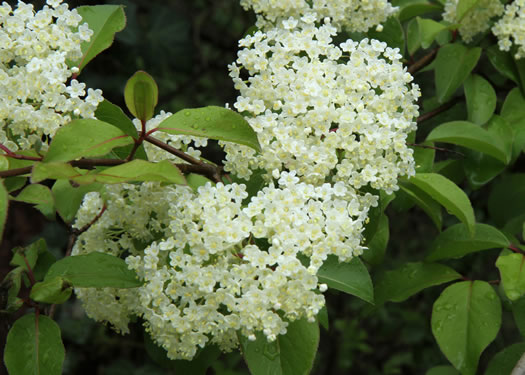
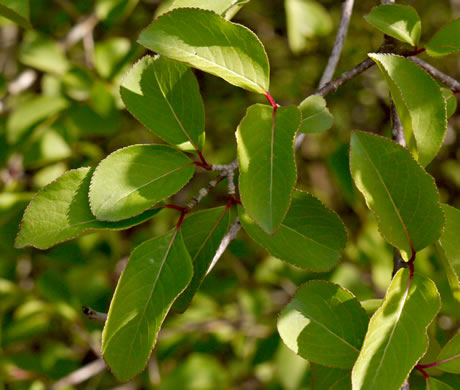
black haw (Viburnum prunifolium),
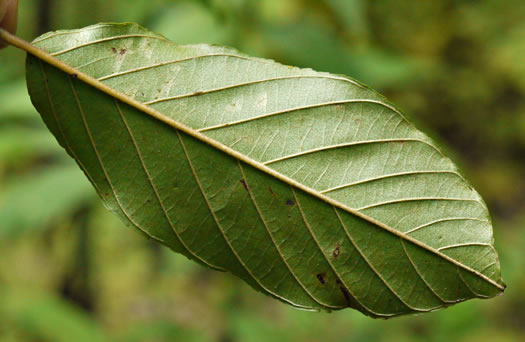
Carolina buckthorn (Rhamnus caroliniana),
New Jersey tea (Ceanothus americanus),
aromatic sumac (Rhus aromatica),
and one or more hawthorns (Crataegus spp.) are present.
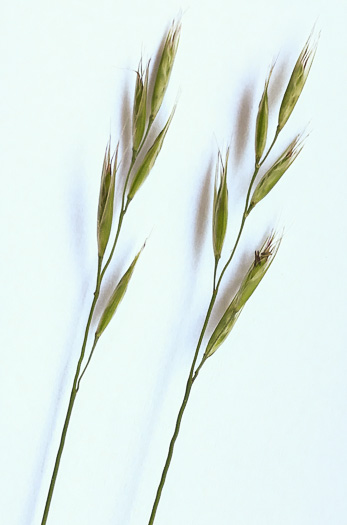
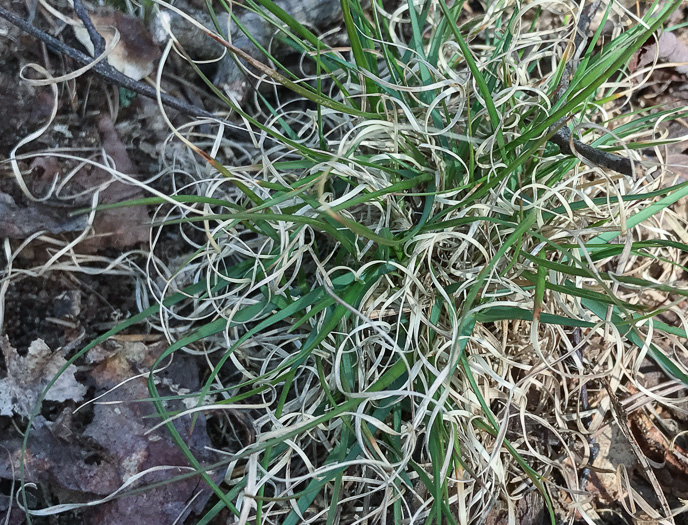
The stunted and spaced trees of the canopy provide no hint of the wonderful diversity of unusual plants in the herbaceous layer. Many of the herbs have affinities with Midwestern prairies, which gives credence to Lawson’s (1709) descriptions of extensive prairies and grassy woodlands in the piedmont of South Carolina. Grasses such as northern oat grass (Danthonia spicata) and various species of broomsedge dominate the herbaceous layer, which is sparse except in canopy openings where herbs can be abundant and diverse. Unusual species include
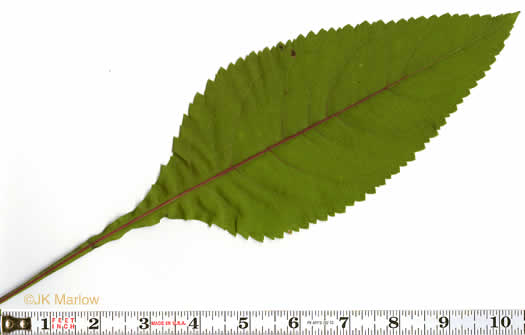
prairie dock (Silphium terebinthinaceum),
curlyheads (Clematis ochroleuca),
Schweinitz’s sunflower (Helianthus schweinitzii),
deceptive spinypod (Matelea decipiens),
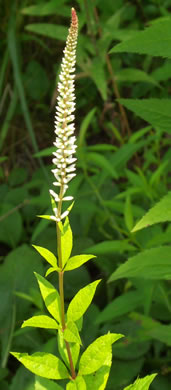
and Culver’s root (Veronicastrum virginicum).
Other herbs include a variety of mostly weedy herbs typical of dry woodland margins, including
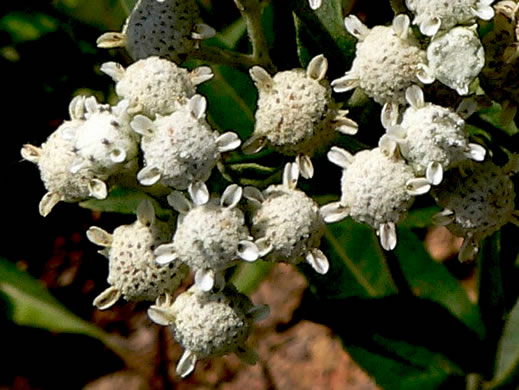
wild quinine (Parthenium integrifolium var. integrifolium),
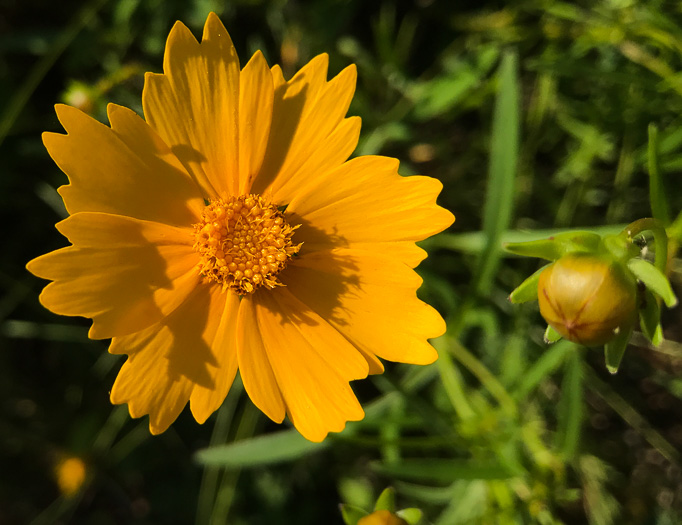
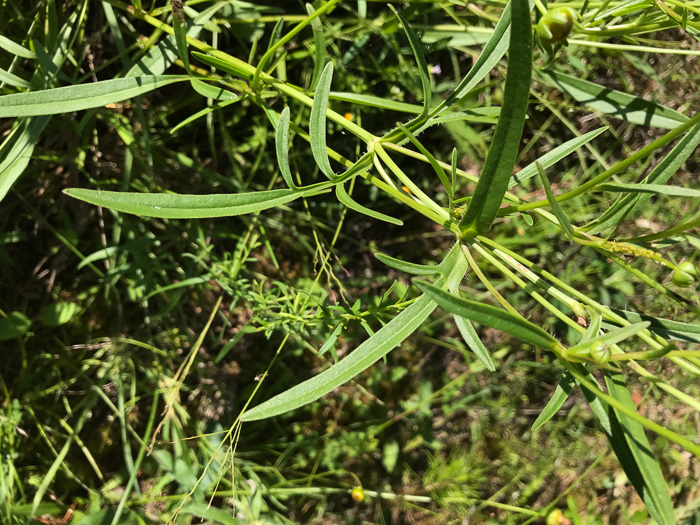
lanceleaf coreopsis (Coreopsis lanceolata),
goat’s rue (Tephrosia virginiana),
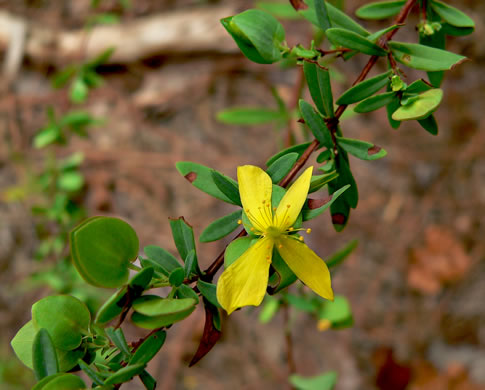
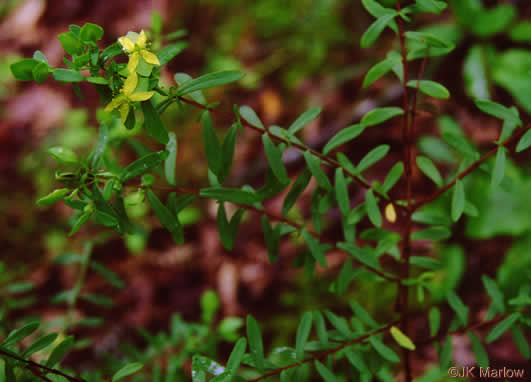
St. Andrew’s-cross (Hypericum hypericoides),
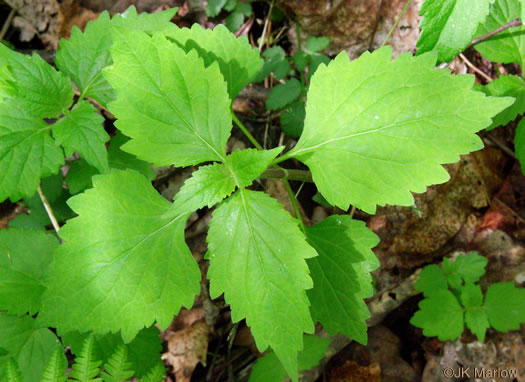
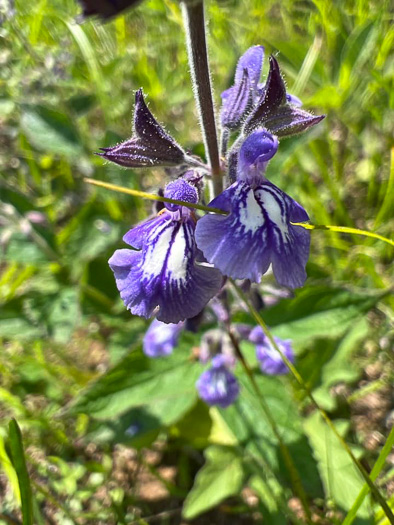
nettle-leaf sage (Salvia urticifolia),
whorled-leaf coreopsis (Coreopsis major),
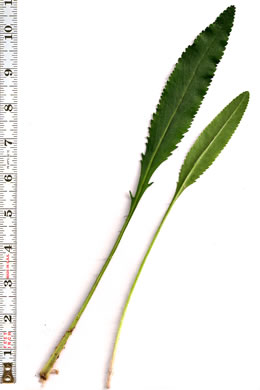
and Small’s ragwort (Senecio smallii).
Some herbs that are typical of more mesic woodlands also are present, including
Solomons-seal (Polygonatum biflorum),
perfoliate bellwort (Uvularia perfoliata),
and three-parted meadow-parsnip (Thaspium trifoliatum).
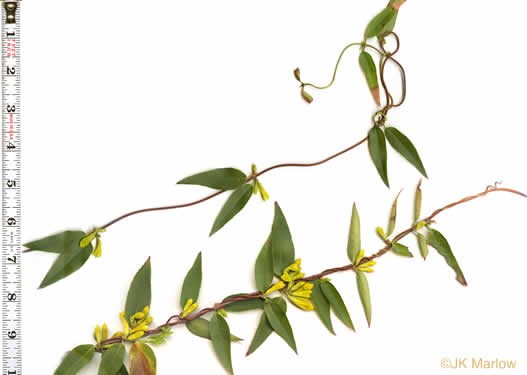
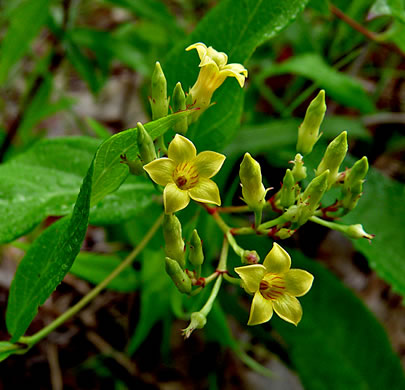
Climbing dogbane (Trachelospermum difforme), an unusual vine that closely resembles Carolina jessamine except it has milky juice, is inevitably present.
The role of fire in the maintenance of this community is unclear, but undoubtedly periodic fires are required. Historical accounts by early naturalists suggest that prairie-like habitats and grassy woodlands were once much more abundant than they are today in the piedmont, probably as a result of the routine use of fire by Native Americans.
Good quality examples of this forest type are rare. Only one site, Rock Hill Blackjacks Heritage Preserve, has been partially protected to date.
South Carolina's Natural Wildflower Communities is adapted from A Guide to the Wildflowers of South Carolina by Richard D. Porcher and Douglas A. Rayner. Used by permission.
To see pictures or additional information about a particular plant, click its name or its picture.