
The Fine Print
As a matter of course, plant people often use — almost intuitively — on-site factors such as neighboring plants, soil, slope, aspect, touch, taste, or smell, and a good close look with a hand lens, to aid in identification.
Since some of the plants pictured here were identified from photographs, their IDs come accompanied by disclaimers, “This appears to be.../ I’m
almost certain.../ It looks to me like....”
Nevertheless, it is our belief that the pictures displayed here fairly represent the plants we suppose them to be. (When/if you do spot an error, please let me know: webmaster @ namethatplant.net.)
The Recommendations
Always check with the source.
For example, you may read on this website that Mecklenburg County suggests Sweetgum for use in home landscapes, which they do. Their specific recommendation is for a particular non-fruiting cultivar, and NameThatPlant.net does not attempt to communicate such subtleties.
Likewise, many of the recommendations are site-specific: recommended specifically for water's edge or a dry sunny area, etc. Please check with the source.
The Condemnations
Always check with the source.
Plants included on the various lists of Invasives may range from those known to be a severe or significant threat, to those that bear watching because they are causing problems in nearby areas.
The Natives
Often when a plant is cited as “native” it means native to the continental United States, but a plant native to California can be a serious, alien pest in the Southeast.
Using Weakley's Flora as the primary reference, this website communicates what is believed to be plants’ native status in the Carolinas & Georgia.
The Maps
Within this website, shading on a map indicates that a plant has been documented as growing and (presumably) reproducing outside of cultivation, somewhere within that particular physiographic province. It does not tell us whether the plant grows throughout every county, or if it appears in only one site, nor whether or not the plant is native in that area.
The absence of shading indicates that herbarium collections hold no evidence of this plant growing wild within that province.
To see range maps from Weakley's Flora of the Southeastern US, click the link under the map on NTP's plant detail pages;
to see maps showing occurrence locations of herbarium specimens, visit the Southeast Regional Network of Expertise and Collections.
The Species Lists
We are fortunate to include inventories of plant species from several parks, gardens and preserves — which give us an idea what we may see where. Please bear in mind that most species lists are incomplete, some may contain errors, and many need updating.
The Flowers
Unless specifically noted, all references to flowers and flower parts on this website refer to chasmogamous flowers (those that open before fertilization and are usually cross-pollinated), not to those which are cleistogamous (inconspicuous flowers which self-fertilize and never open).
The Photographs
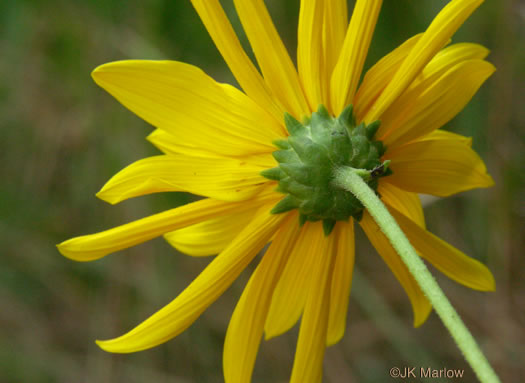
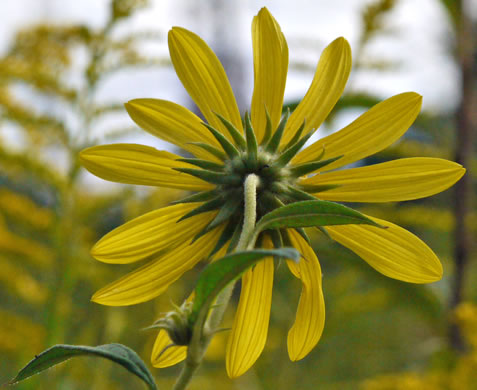
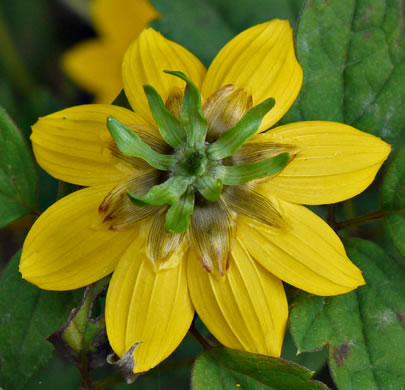
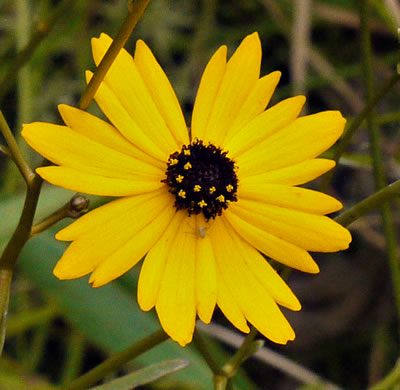
For the most part, the goal of the photographs on this site is to highlight a particular plant or feature. Occasionally, they may just celebrate its beauty....
The photographs remain the property of the photographers, who have agreed that pictures downloaded from this site may be used for non-profit, educational purposes provided proper credit is given to the photographer.
For any other use, for higher resolution images, or for other photographs, contact the photographer directly.
The Sun & the Rain
Light and water requirements have been gleaned from several sources, which sometimes seem to disagree. Full sun in south Georgia is just not the same as full sun in the North Carolina mountains. Plants behave differently in wild and garden settings. And then, there is what a plant prefers, as opposed to what it will tolerate.
Some plants may prefer moist bottomlands but tolerate drought, or prefer shade but can tolerate full sun if they get enough moisture. One can be a function of the other. Some seedlings need lots of sun early on but tolerate shade once established. The shade desired can be light, medium, filtered, open, deciduous (or less often, heavy, deep, or evergreen)....
This database just doesn't have mechanisms in place to communicate all the nuances! Use it to get a general idea, then seek further info.
And Finally
Be aware that the plants themselves have not read the field guides, and sometimes appear to be unaware of how they are expected to behave!
Type only the first 2-3 letters to choose from a dropdown list of genera (this can be especially helpful when you're not sure of the spelling).
If "wooly" doesn't deliver the results you want, try an alternate spelling such as "woolly" or just "wool".