South Carolina's Natural Wildflower Communities —
THE MOUNTAINS:
The evergreen forest communities
Canada hemlock forests
This is one of the most abundant and easily recognized mesic communities in the mountains. It is found in only a few sites in the piedmont. This community is always on highly acidic soils and borders nearly every narrow ravine in the mountains that has a small stream running through it. It is also found on broad streamside flats, on north-facing slopes, and in bands of varying width above cove forests. The forest is characteristically dense with a high dominance of Canada hemlock (Tsuga canadensis). Other important trees include
white pine (Pinus strobus)
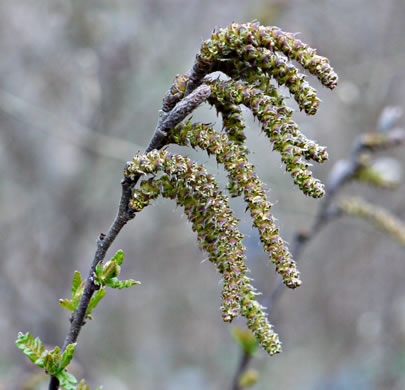
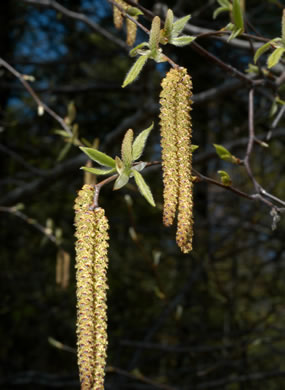
and sweet birch (Betula lenta).
Great laurel (Rhododendron maximum) usually forms a dense undergrowth, often mixed with mountain laurel.
Mountain doghobble (Leucothoe fontanesiana) sometimes forms a dense low shrub layer. In places where the understory is not dense, a variety of shrubs may be present, including
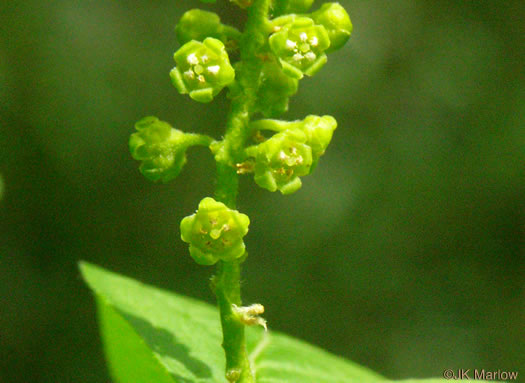
buffalo-nut (Pyrularia pubera),
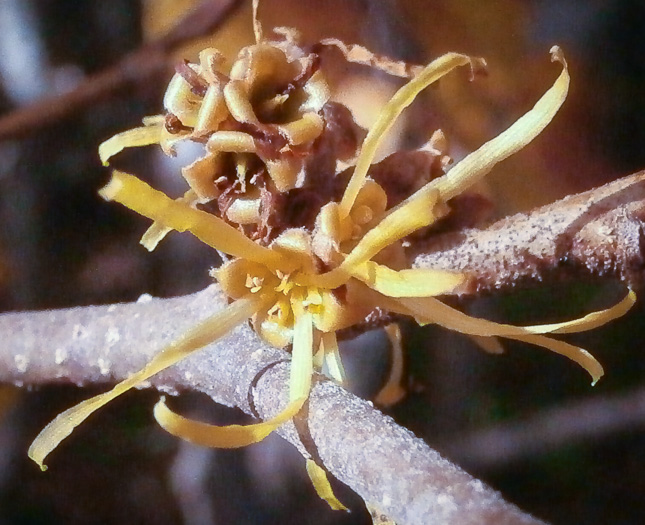
witch-hazel (Hamamelis virginiana),
strawberry-bush (Euonymus americanus),
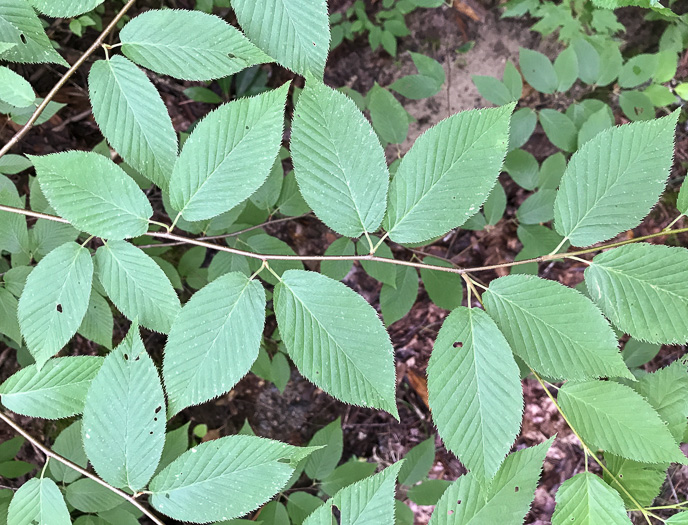
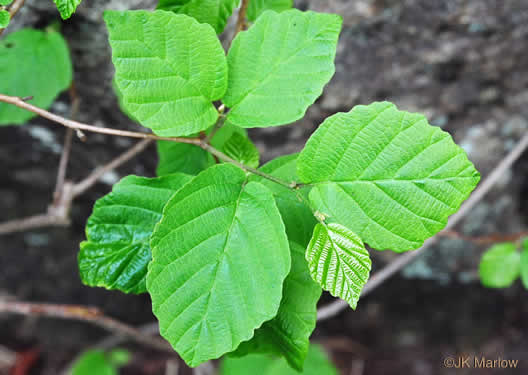
mountain white-alder (Clethra acuminata),
and the rare mountain camellia (Stewartia ovata).
Herbaceous plant diversity is low, and typical species include
partridge berry,
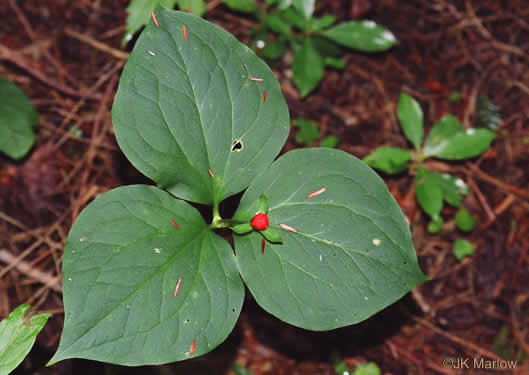
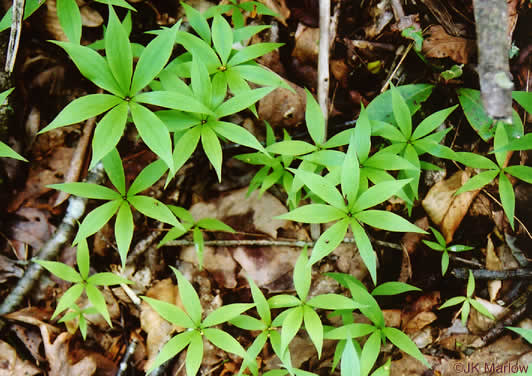
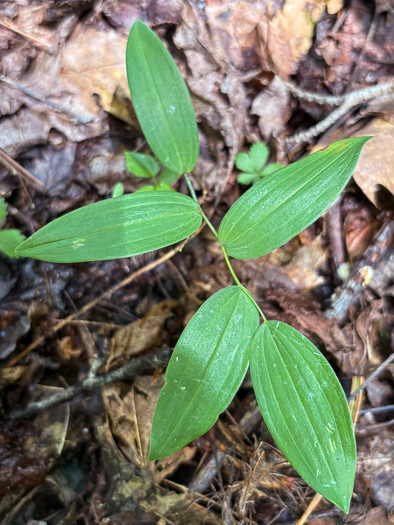
Indian cucumber-root,
common foamflower (Tiarella cordifolia var. collina),
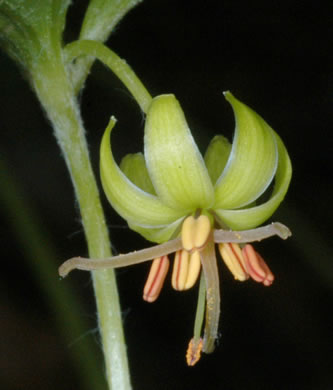
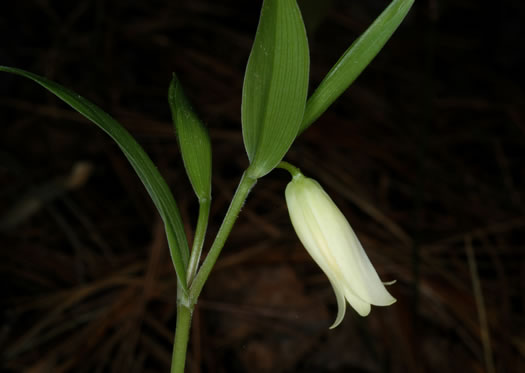
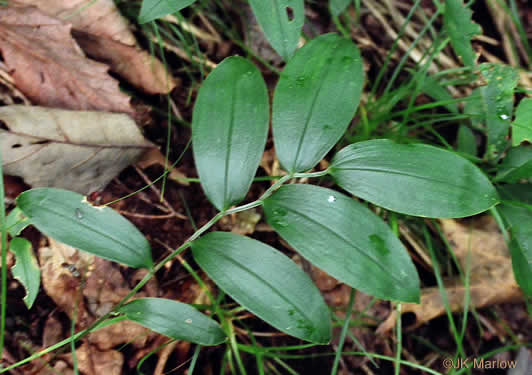
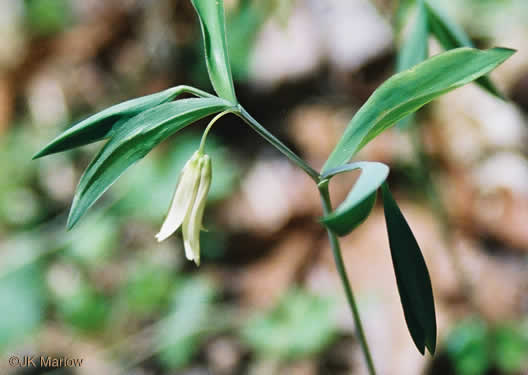
sessile-leaf bellwort,
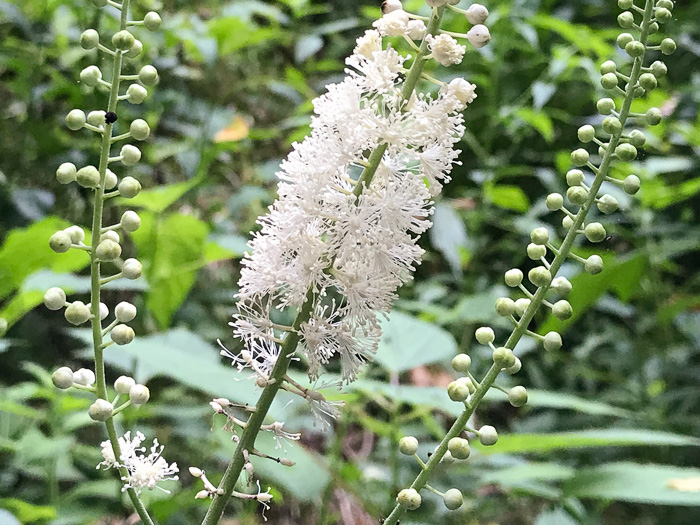
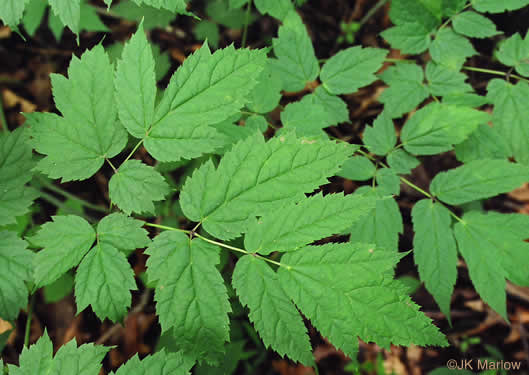
black cohosh,
round-leaf yellow violet,
and sweet white violet.
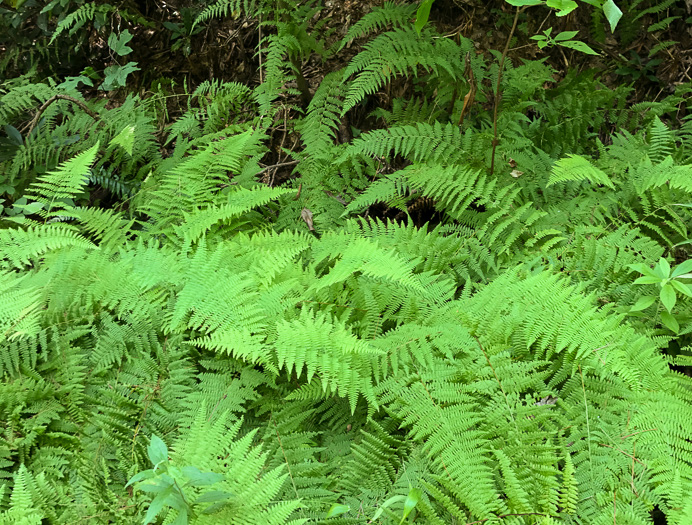
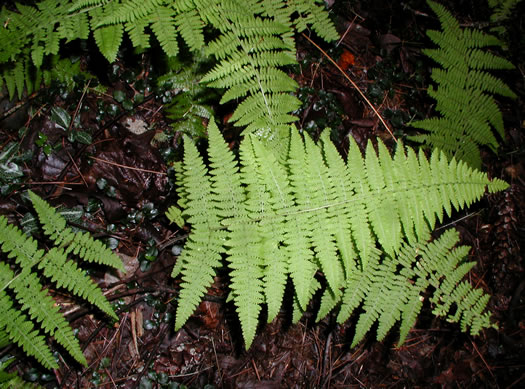
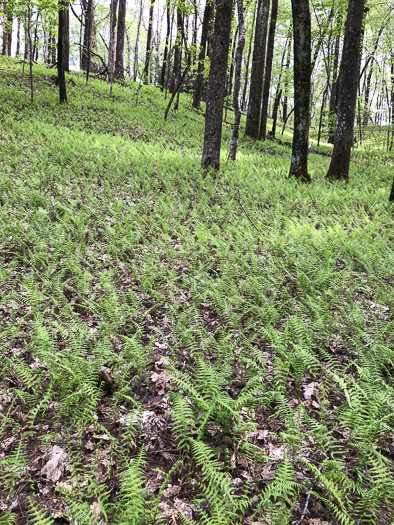
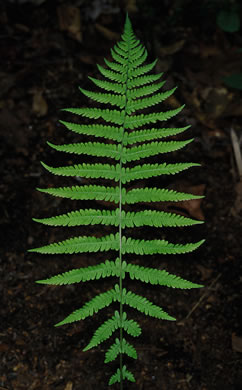
Ferns sometimes form a dense ground cover. The most common are
New York fern (Thelypteris novaboracensis),
hay-scented fern (Dennstaedtia punctilobula),
and Christmas fern (Polystichum acrostichoides).
At high elevations,
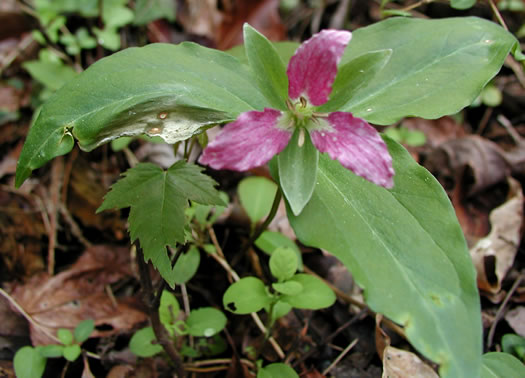
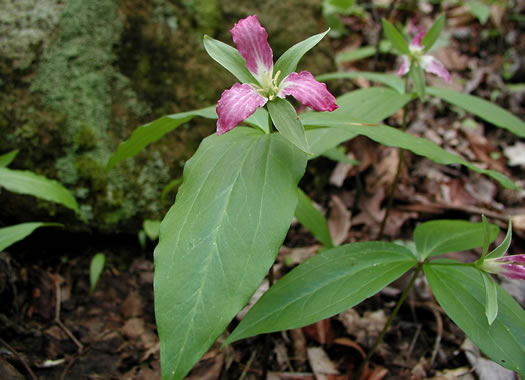
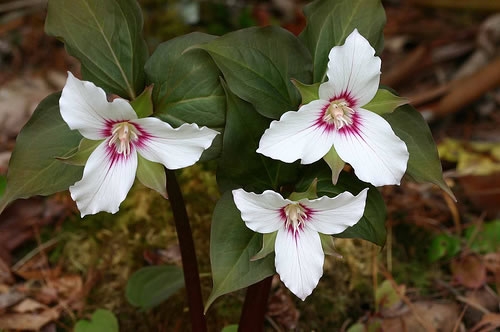
painted trillium (Trillium undulatum),
long-spur violet (V. rostrata),
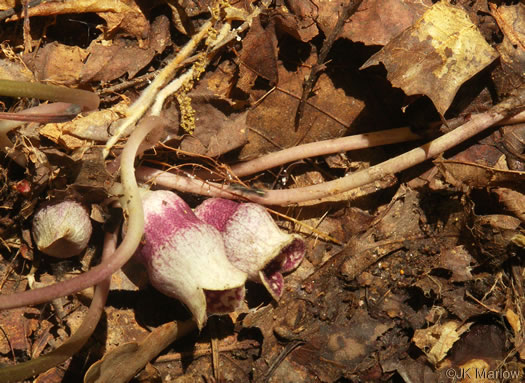
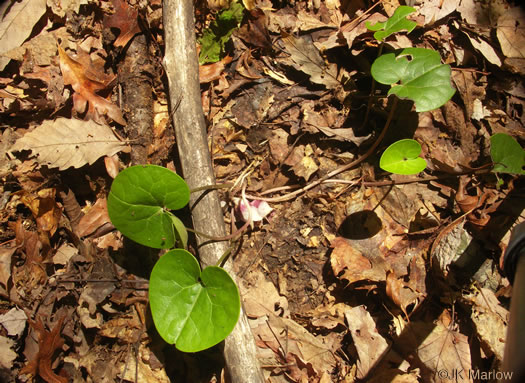
French broad heartleaf (Hexastylis rhombiformis),
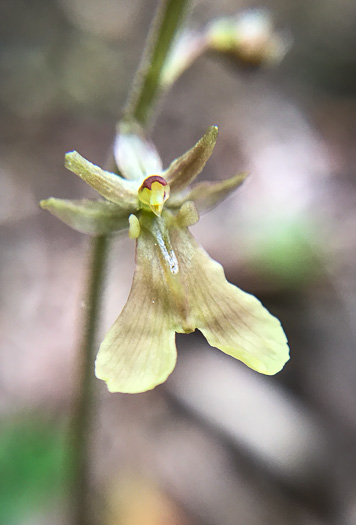
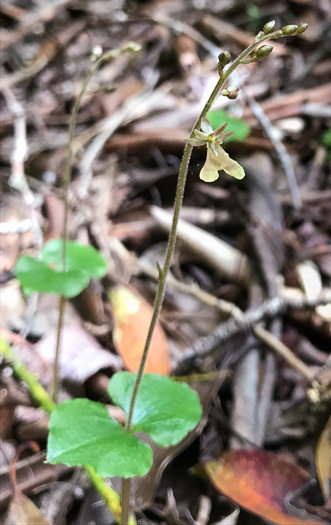
and Appalachian twayblade (Listera smallii)
can occasionally be found. Where this community occurs on broad streamside flats, the understory is usually quite sparse and three-birds orchid (Triphora trianthophora) and persistent trillium (Trillium persistens) are uncommon but delightful finds.
Since this community is often bounded by more diverse communities (i.e., cove forests or oak-hickory forest communities), some of the species typical of these communities may be present.
Pine-oak heaths
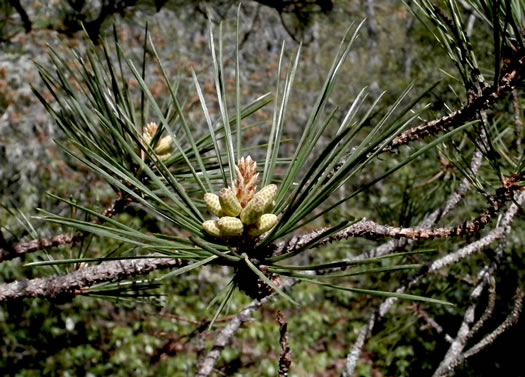
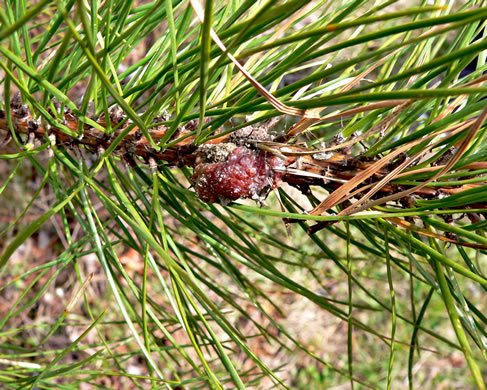
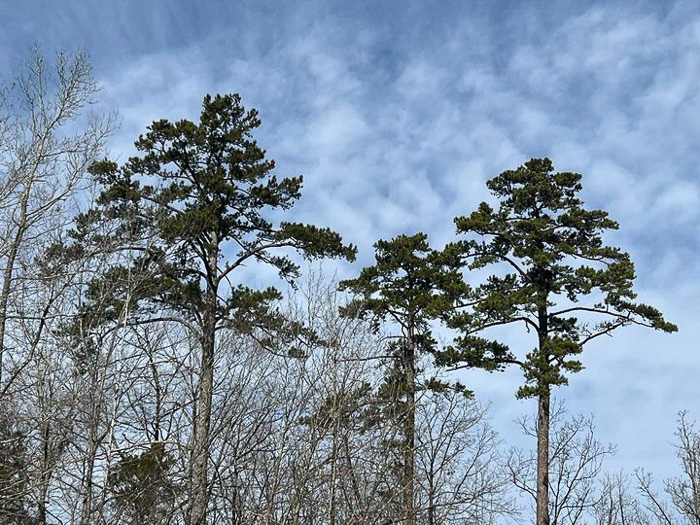
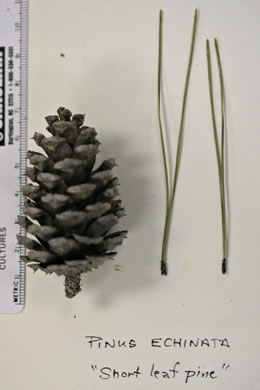
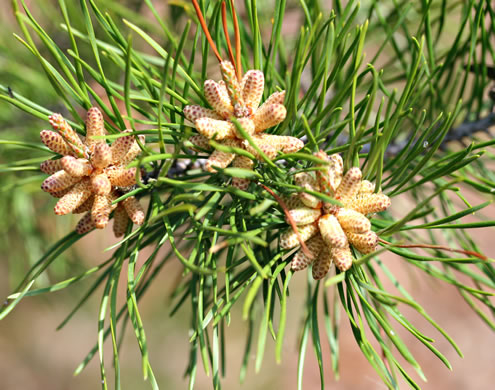
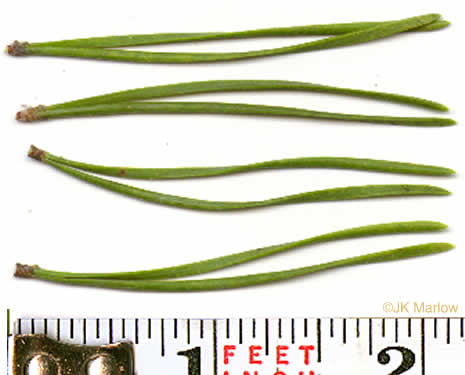
Pine-oak heaths are reminiscent of the pine barrens of New England and New Jersey. This community occurs on poor, highly acidic soils of narrow ridges, steep south slopes, and the entire tops of small mountains in the upper piedmont and mountains. A variety of pines and dry-site oaks dominate the often stunted canopy. Pitch pine (Pinus rigida) and Virginia pine (P. virginiana) are the most common pines, while Table Mountain Pine occurs on very dry soils in high-elevation sites, white pine (P. strobus) may dominate on more mesic high-elevation sites (especially sites that were previously cleared by man), and shortleaf pine (P. echinata) may be present on low-elevation sites, especially in the piedmont. Oaks in this community typically include
scarlet oak (Q. coccinea),
black oak (Q. velutina),
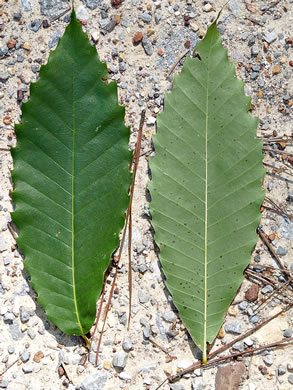
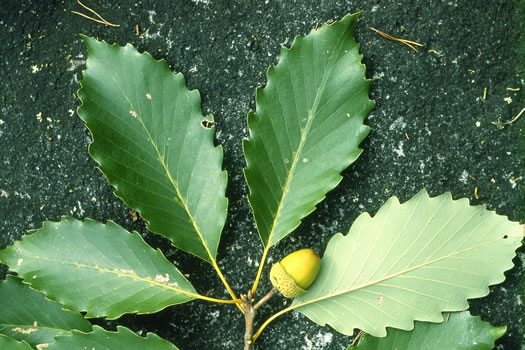
chestnut oak (Q. montana),
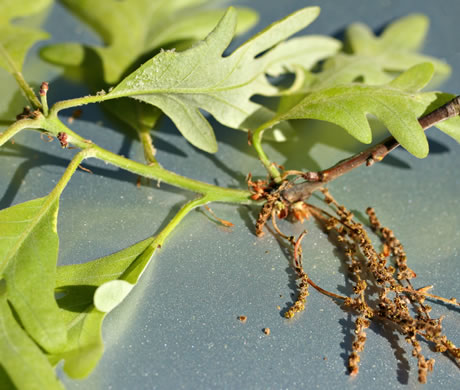
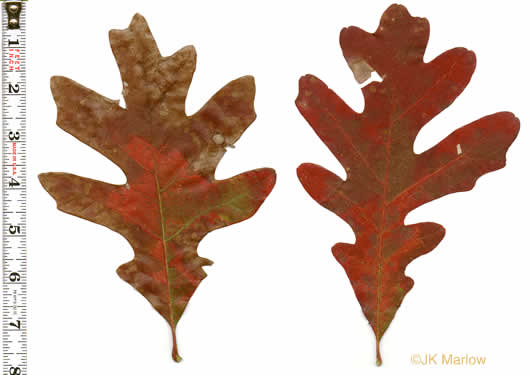
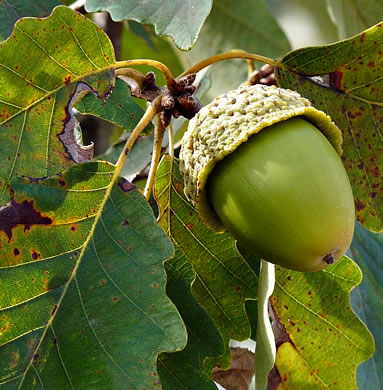
and less commonly white oak (Q. alba)
or blackjack oak (Q. marilandica).
Understory species include
black gum,
sourwood,
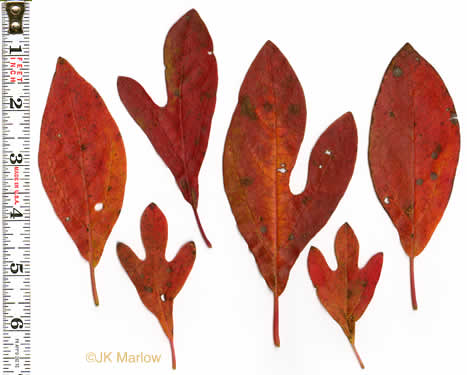
sassafras,
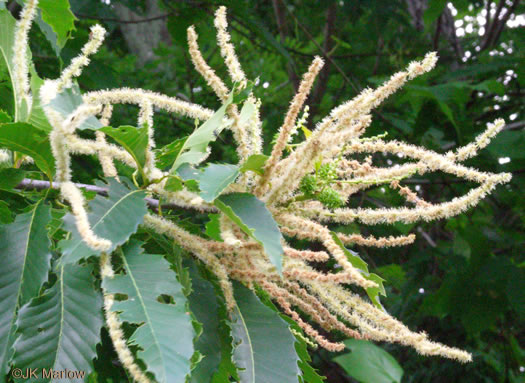
the stump sprouts of American chestnut,
and occasionally Carolina hemlock (Tsuga caroliniana).
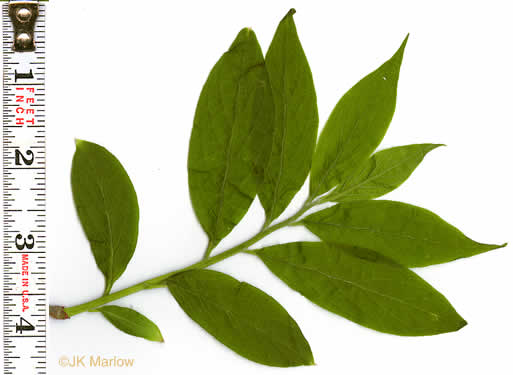
The shrub layer is usually dense, consisting of evergreen and deciduous ericads, and may be either “tall” or “low.” Tall ericads include scattered to dense mountain laurel and/or gorge rhododendron (Rhododendron minus), interspersed with a dense cover of bear and black huckleberries (Gaylussacia ursina and G. baccata respectively) and mountain doghobble (Leucothoe fontanesiana). Horse sugar is one of the few nonericad shrubs typically found here. Low heaths are dominated by a moderate to dense cover of the low-growing dryland blueberry (V. vacillans).
Herbaceous plant diversity is low, and typical species include
trailing arbutus,
pale yellow bellwort (Uvularia puberula),
goat's rue (Tephrosia virginiana),
galax,
and spotted wintergreen.
Bracken fern (Pteridium aquilinum) may form large stands or is widely scattered. Species that are characteristic of this community, but are rarely seen, include
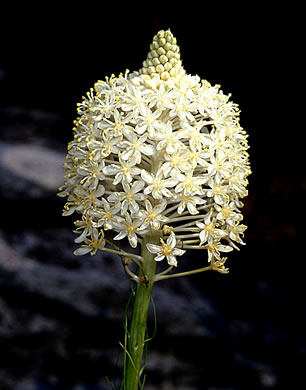
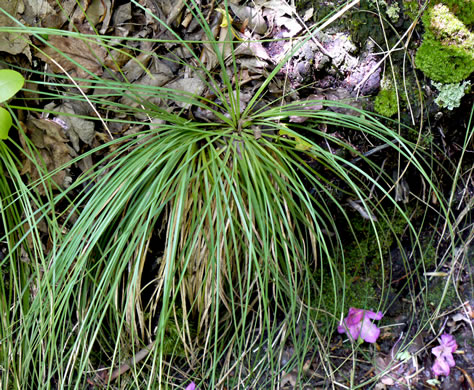
turkeybeard (Xerophyllum asphodeloides),
wintergreen (Gaultheria procumbens),
ash-leaf golden-banner (Thermopsis fraxinifolia),
gaywings (Polygala paucifolia),
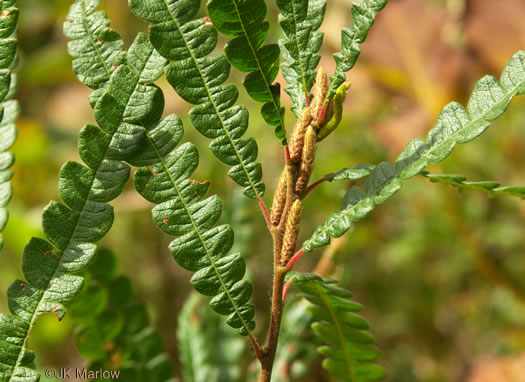
sweet fern (Comptonia peregrina),
sweet pinesap (Monotropsis odorata),
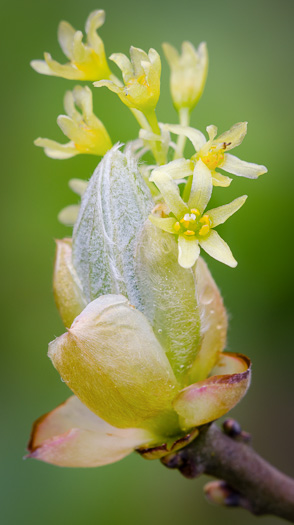
and mountain witch-alder (Fothergilla major).
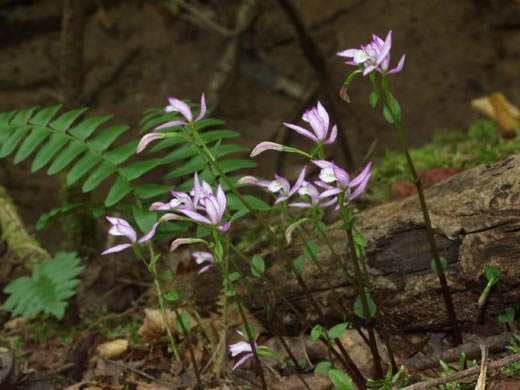
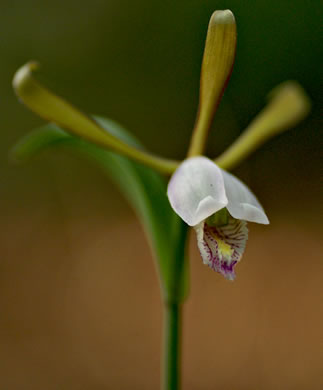
The attractive, small, spreading pogonia (Cleistes bifaria) is a common component of this community but it is seldom seen because it blooms in the heat of June and July.
Like the pine barrens of New Jersey this community probably depends on periodic fires for its maintenance. Lightning-ignited fires probably were important in the past. Today most managers of these communities on state or federal lands seem reluctant to provide prescribed fires.
South Carolina's Natural Wildflower Communities is adapted from A Guide to the Wildflowers of South Carolina by Richard D. Porcher and Douglas A. Rayner. Used by permission.
To see pictures or additional information about a particular plant, click its name or its picture.