South Carolina's Natural Wildflower Communities —
THE FALL-LINE SANDHILLS:
The xeric communities
Longleaf pine-scrub oak sandhills
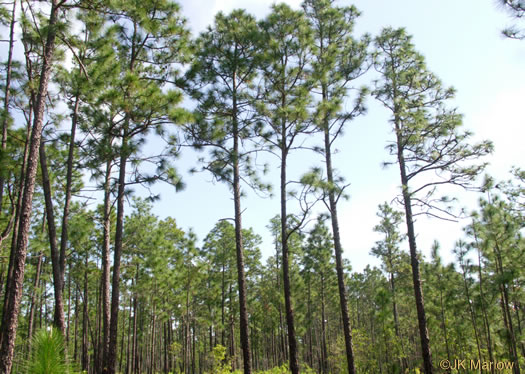
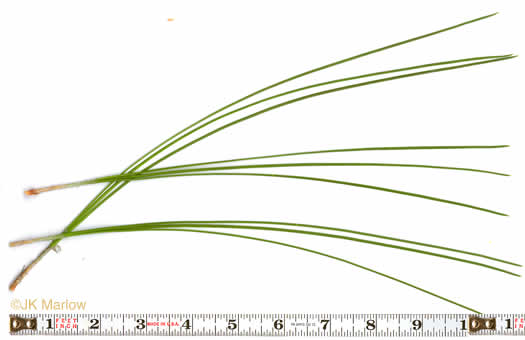
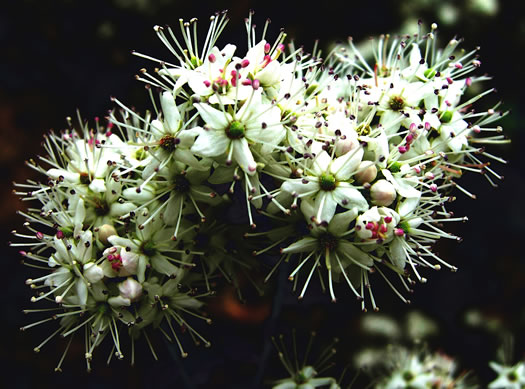
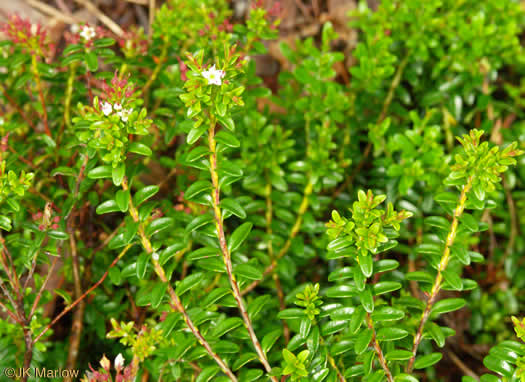
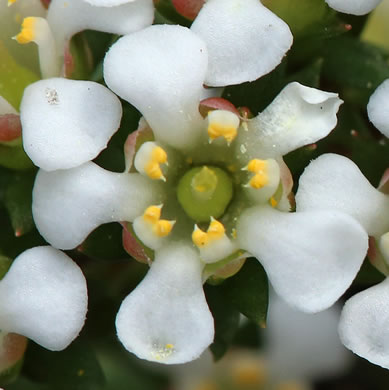
The name of this community references three of its most important components. It is dominated by an open canopy of longleaf pine, and a variety of scrub oaks dominate the open to dense subcanopy. It differs from the longleaf pine-turkey oak community in being less xeric and more fertile, which is probably a result of a shallower sand layer and more organic matter in the soil. This community harbors a greater diversity of species. It is found on middle and lower slopes in the sandhills but can be found on sand deposits throughout the coastal plain. Some authors suggest that this community has a clay layer near the surface, which is true of sites with an abundance of sand myrtle (Leiophyllum buxifolium). It is bounded by longleaf pine-turkey oak upslope and dry oak-hickory forests or streamhead pocosins downslope. Fire suppression has significantly affected this community.
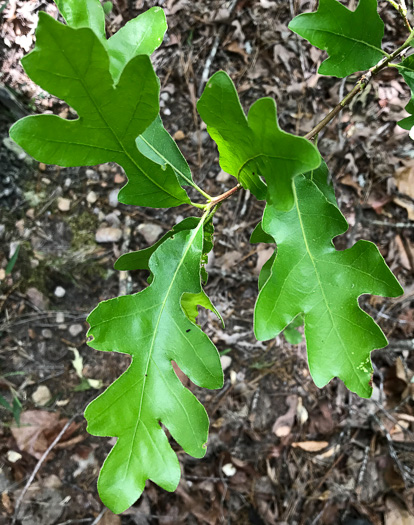
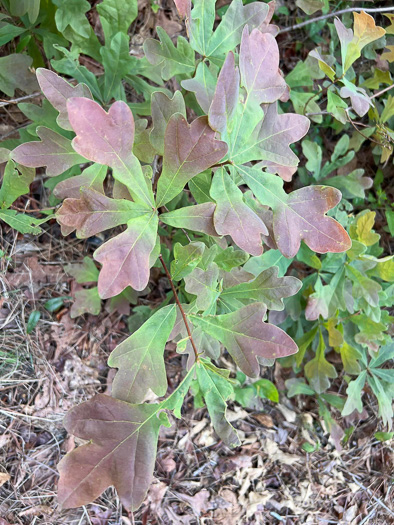
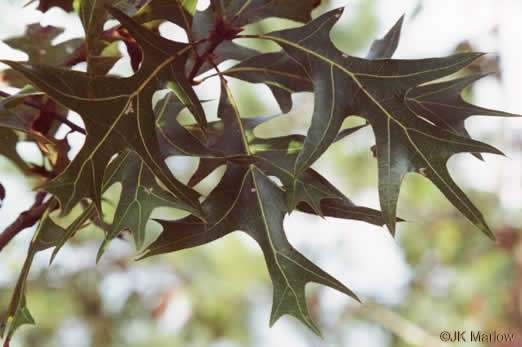
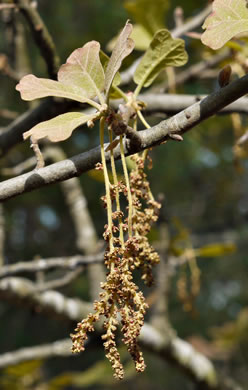
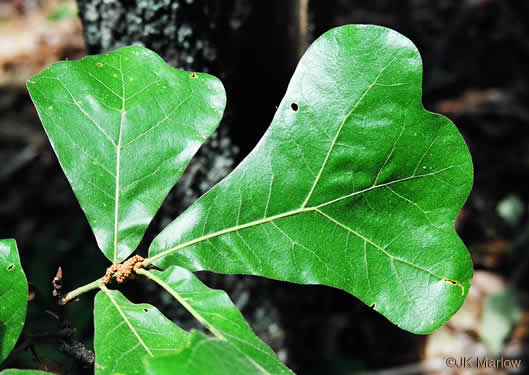
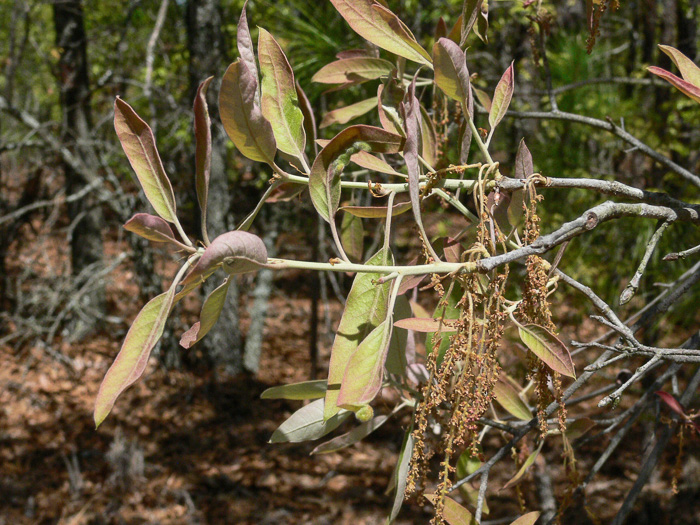
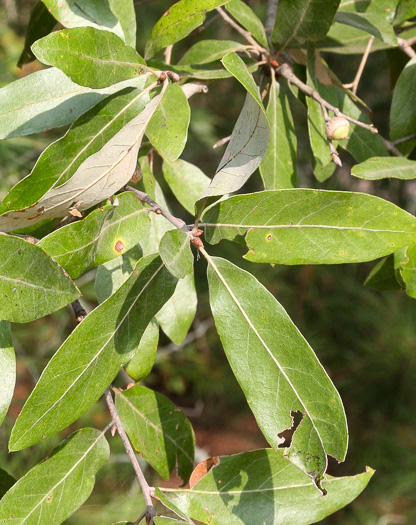
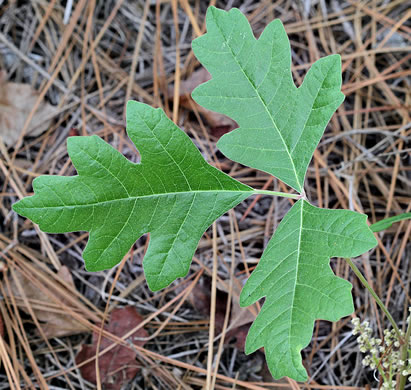
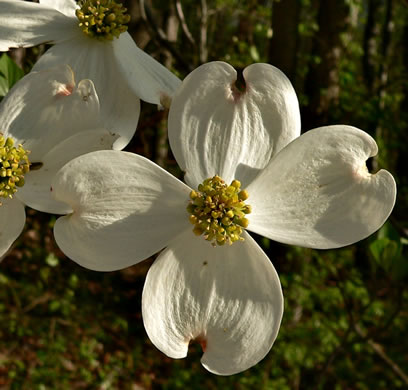
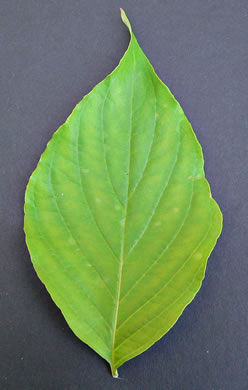
The longleaf pines that form the open canopy become flat-topped with age, creating a distinct and aesthetically pleasing appearance from a distance. The subcanopy is dominated by blackjack oak (Quercus marilandica), with lesser amounts of turkey oak, bluejack oak (Q. incana), and sand post oak (Q. margaretta). Sassafras and persimmon usually are present, and occasionally flowering dogwood (Cornus florida). The shrub layer is dominated by ericads,
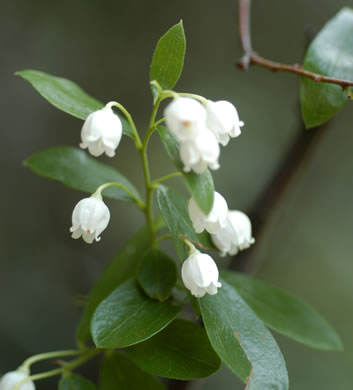
especially sparkleberry (Vaccinium arboreum),
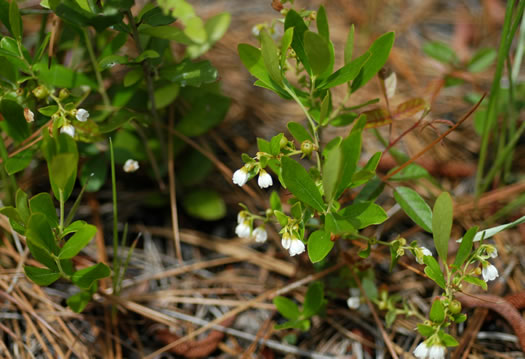
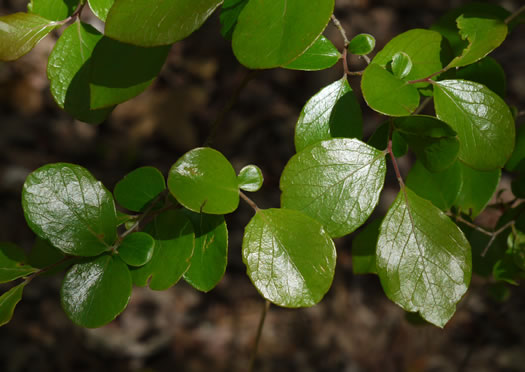
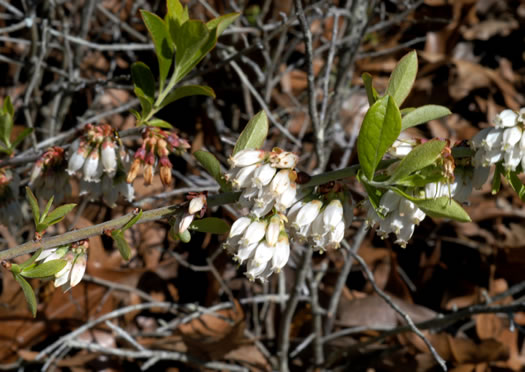
southern blueberry (Vaccinium tenellum),
and southern dwarf huckleberry (Gaylussacia dumosa var. dumosa),
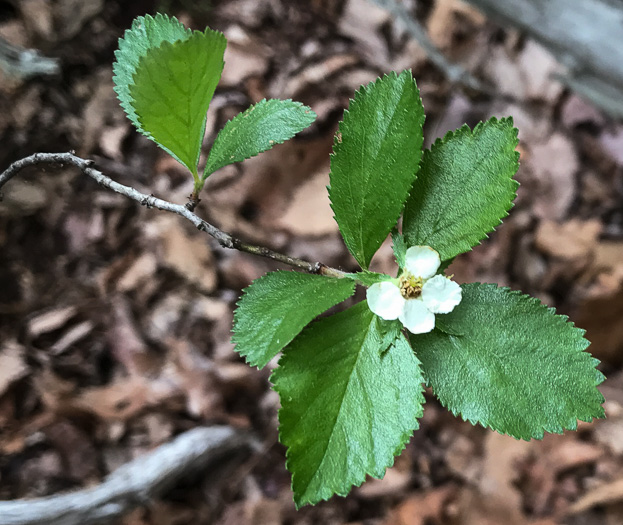
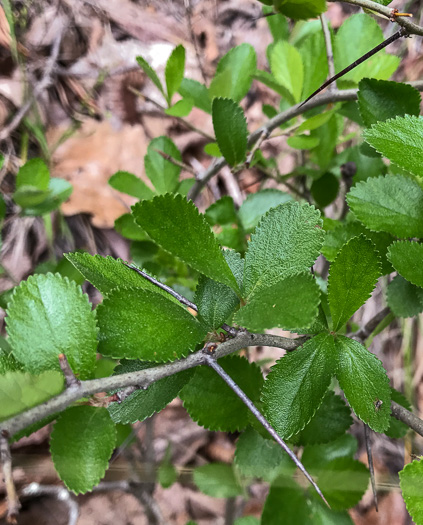
poison oak, several species of hawthorn (especially southern haw, Crataegus flava, and dwarf-thorn, C. uniflora), and Carolina jessamine.
Rare to uncommon shrubs include
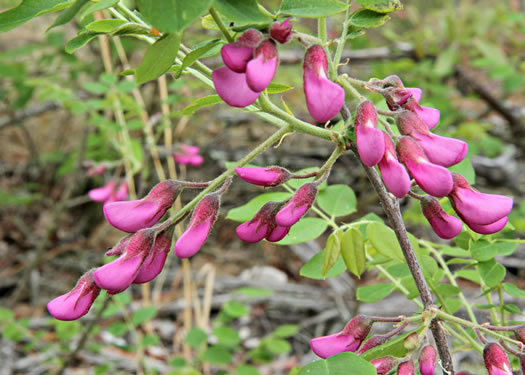
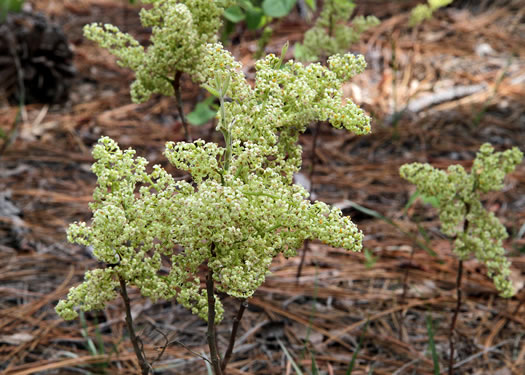
dwarf bristly locust (Robinia nana)
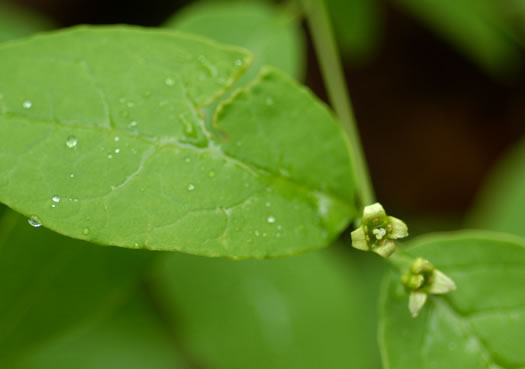
and nestronia (Nestronia umbellula).
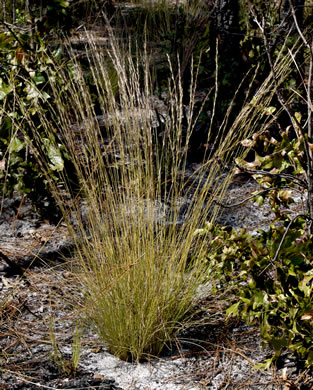
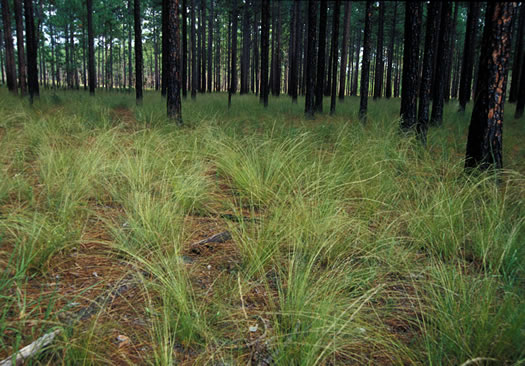
The herbaceous layer is well developed and dominated by
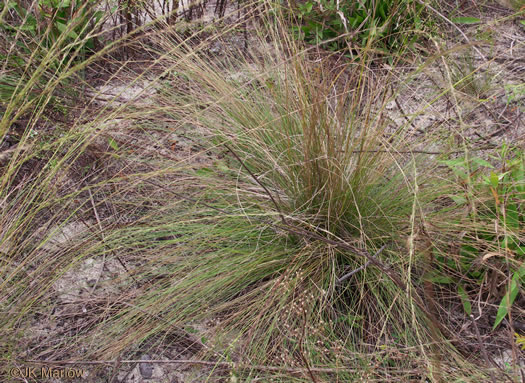
wiregrass (Aristida stricta in the north and Aristida beyrichiana in the south)
and creeping little bluestem (Andropogon scoparium var. stoloniferum).
A variety of broadleaf herbs may be present, including
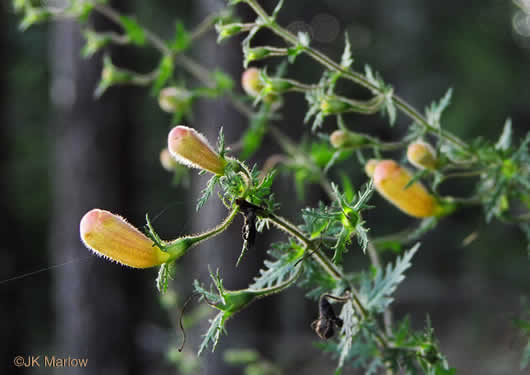
senna seymeria (Seymeria cassioides),
puccoon (Lithospermum caroliniense),
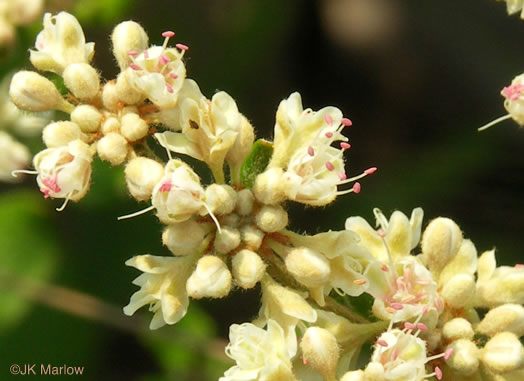
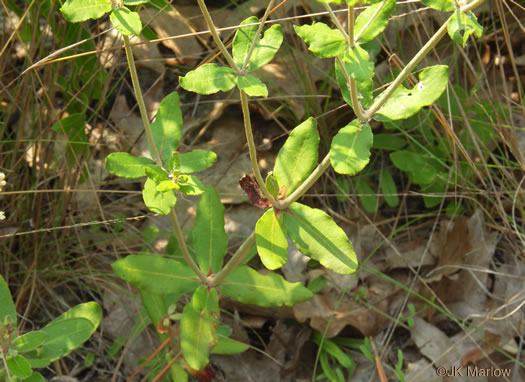
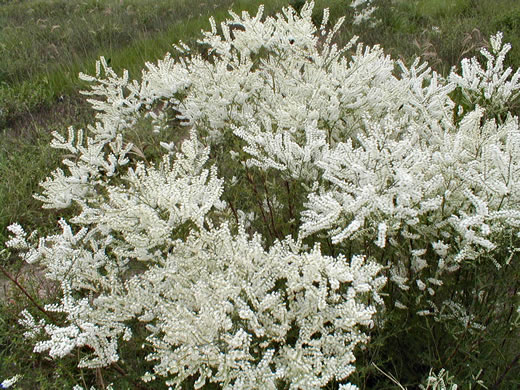
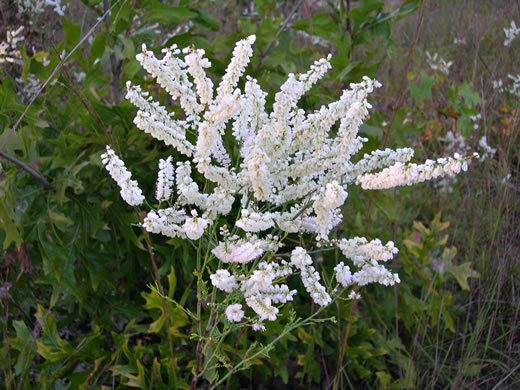
jointweed (Polygonella americana),
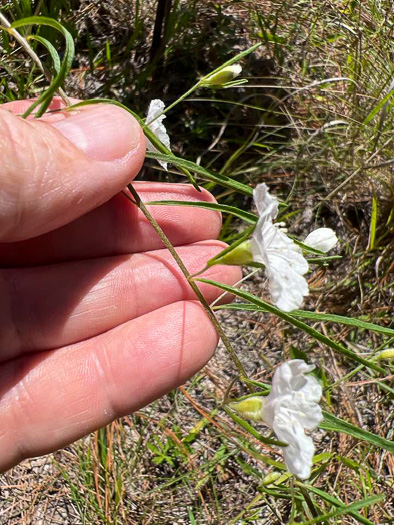
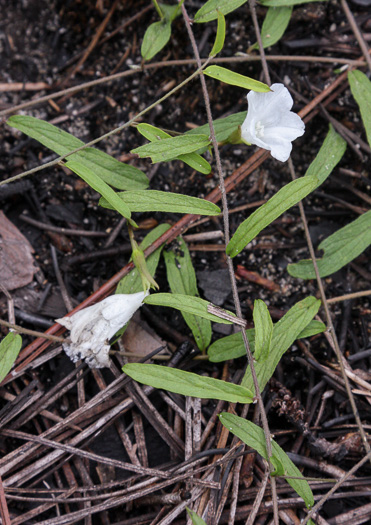
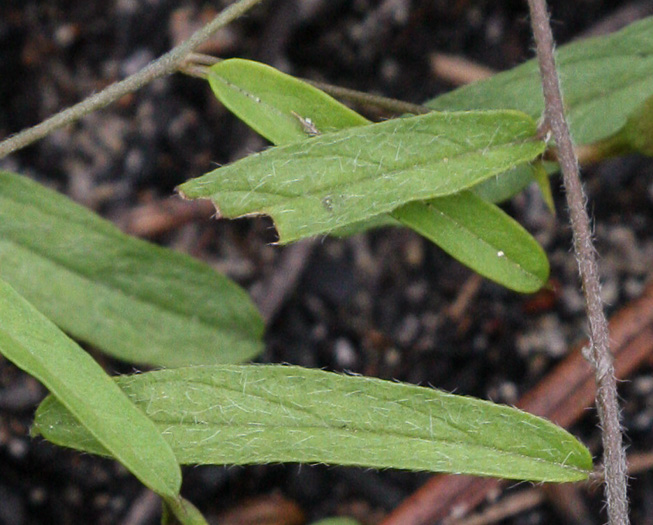
narrowleaf dawnflower (Stylisma patens var. angustifolia),
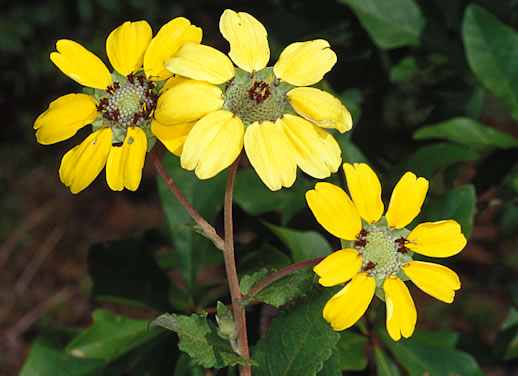
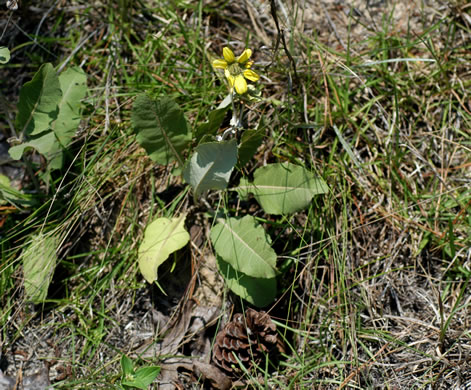
eastern green-eyes (Berlandiera pumila),
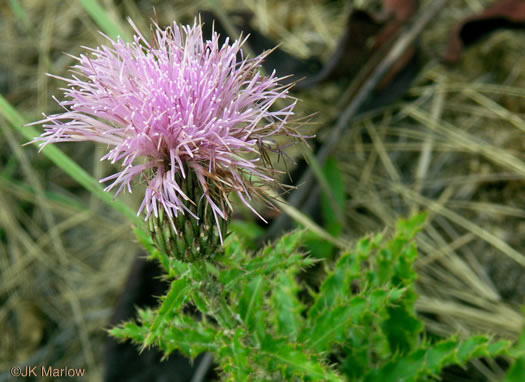
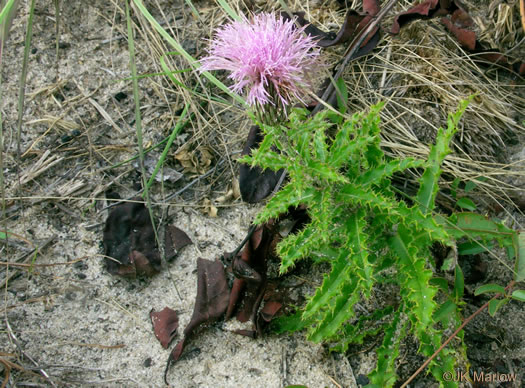
and sandhills thistle (Cirsium repandum).
Species that are more typical of dry oak-hickory forests or dry pine-oak woodlands and are found here include
devil’s shoestring
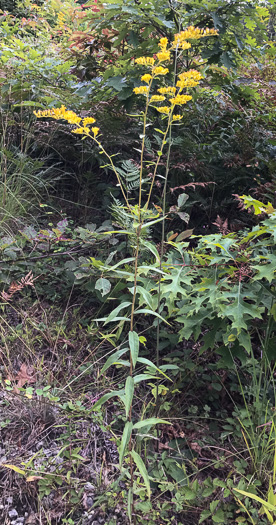
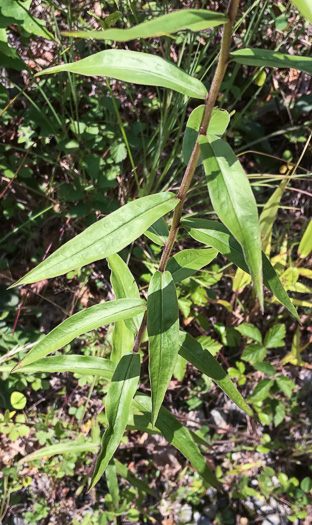
and sweet goldenrod.
Species that are more typical of the longleaf pine-turkey oak community include
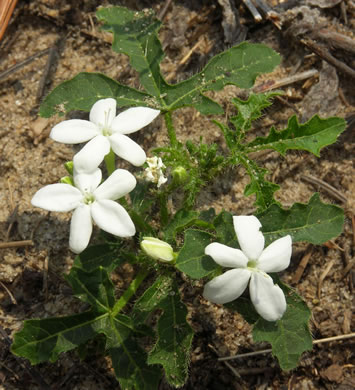
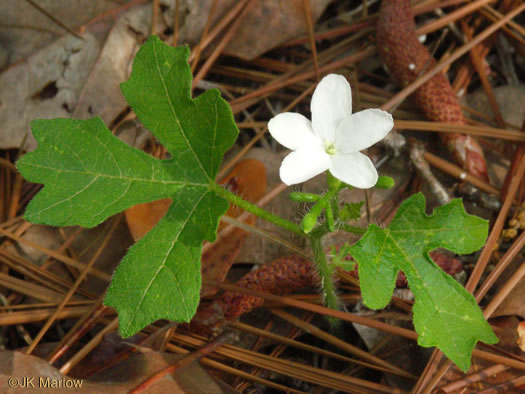
tread-softly (Cnidoscolus stimulosus),
Carolina ipecac (Euphorbia ipecacuanhae),
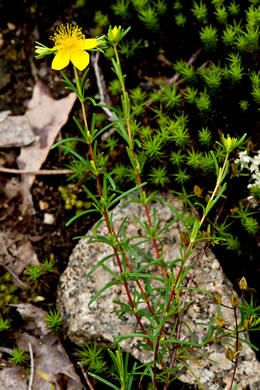
and sandhills St. John's-wort (Hypericum lloydii).
Many additional species characteristic of dry and/or dry and disturbed areas may be present, so don't be surprised if you can't identify everything.
Longleaf pine-turkey oak sandhills
The longleaf pine-turkey oak sandhills community is the most xeric and least fertile of all the pineland communities in South Carolina. It occurs on deep, coarse sands, most typically wind-blown sands on ridge tops of the fall-line sandhills. This community also is found on fluvial sand ridges (deposited by high waters) that parallel and are east of the major coastal plain rivers and on rims of Carolina bays. In the maritime strand, they are even found on old beach dunes. All of these systems are characterized by an open canopy of longleaf pine (Pinus palustris), and all have the subcanopy dominated or codominated by turkey oak (Quercus laevis). These systems also are characterized today by large patches of open sands and an abundance of ground lichens, commonly called British soldiers (Cladonia spp.).
The longleaf pine-turkey oak sandhills community is distinguished from longleaf pine-scrub oak sandhills by its abundance of turkey oak and bluejack oak (Q. incana) and the general lack of other scrub oaks, other than the occasional sand post oak (Quercus margaretta). Wiregrass is present in both communities but more abundant in the latter. The longleaf pine-turkey oak community grades downslope into a longleaf pine-scrub oak sandhills or streamside pocosin community.
No one who has ever stood in a xeric sandhills in the middle of a sunny July day has any doubt that this is a harsh habitat, but a number of species have adapted. Shrubs are as abundant as herbs, and both may be sparse to moderately dense. Characteristic shrubs include
southern dwarf huckleberry (Gaylussacia dumosa var. dumosa),
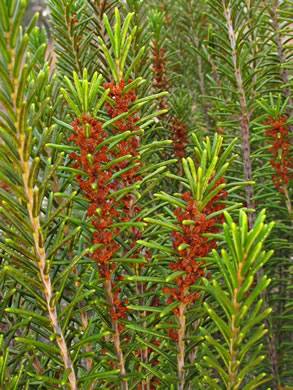
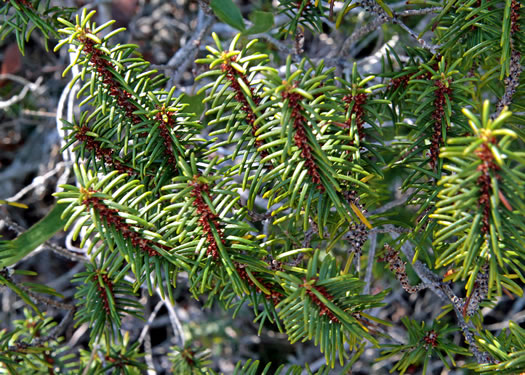
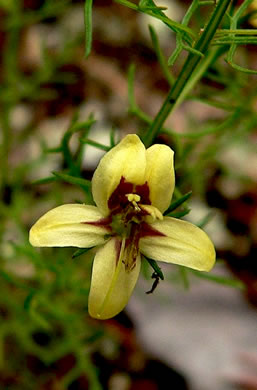
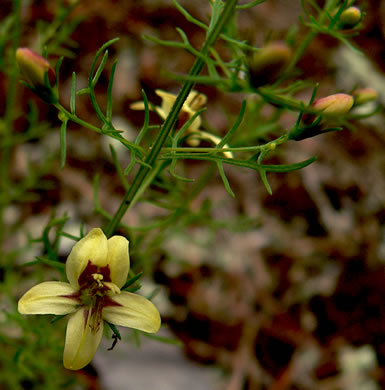
rosemary (Ceratiola ericoides),
poison oak (Rhus toxicodendron),
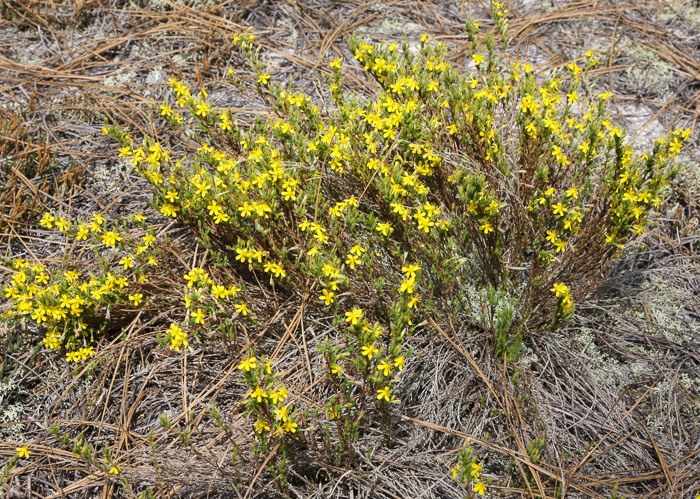
and the very attractive low shrub sandhills St. John's-wort (Hypericum lloydii).
Herbs include
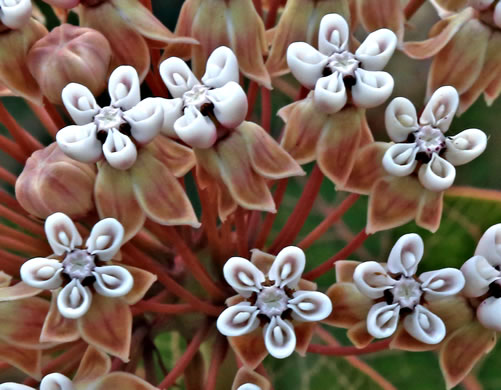
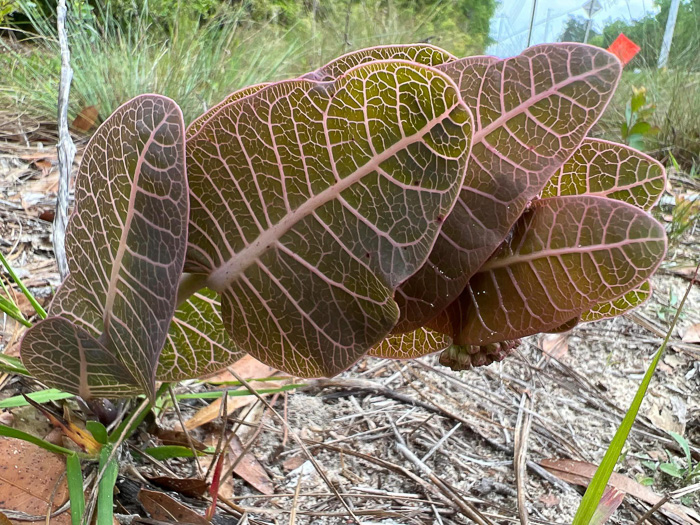
sandhills milkweed (Asclepias humistrata),
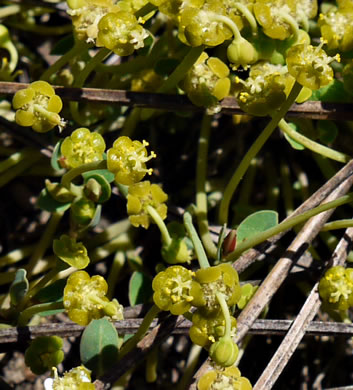
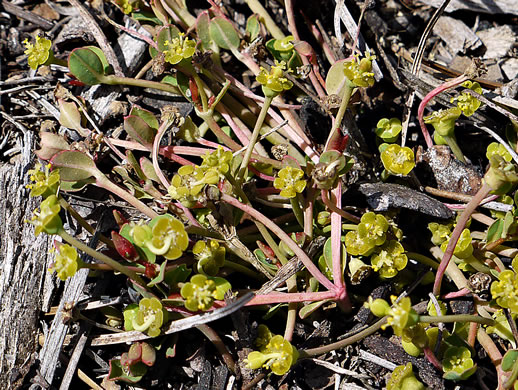
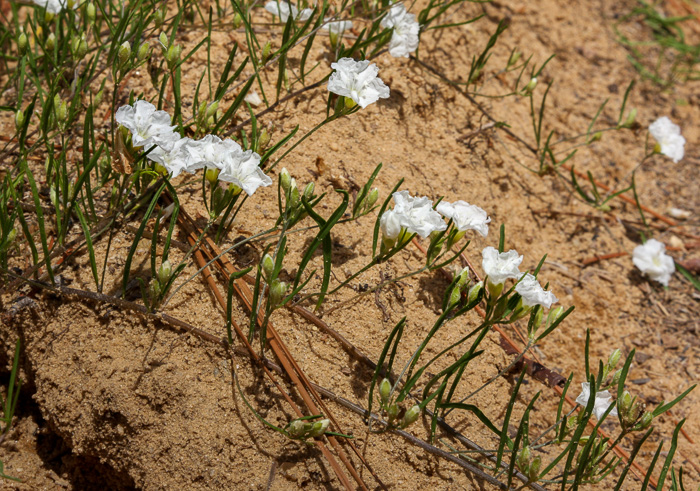
wire-plant (Stipulicida setacea),
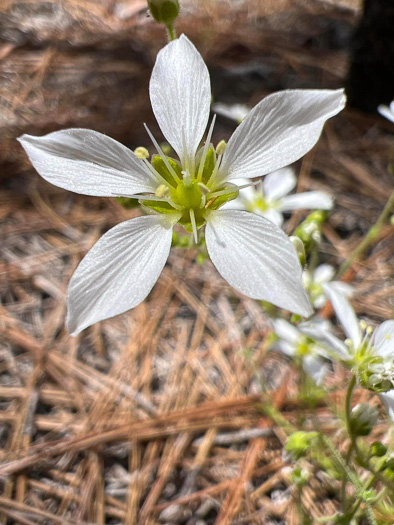
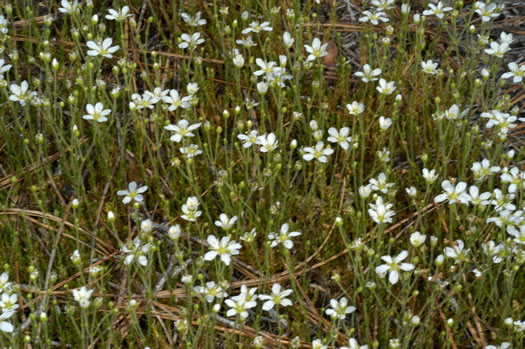
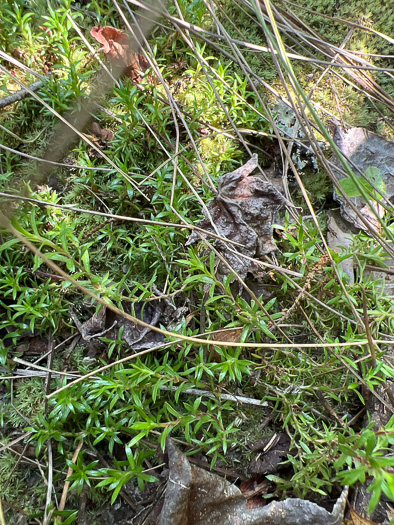
Carolina sandwort (Arenaria caroliniana),
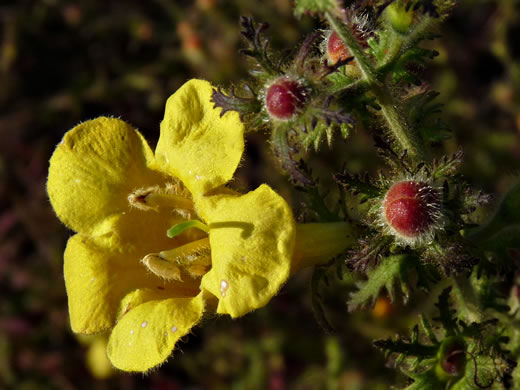
hairy false foxglove (Aureolaria pectinata),
sandhill wild-buckwheat (Eriogonum tomentosum),
tread-softly (Cnidoscolus stimulosus),
Carolina ipecac (Euphorbia ipecacuanhae),
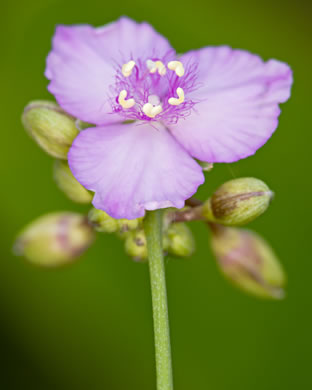
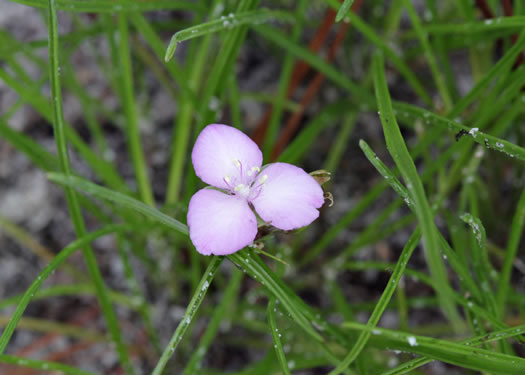
and roseling (Tradescantia rosea var. graminea).
Unusual plants found at only a few sites include
Pickering’s dawnflower (Stylisma pickeringii var. pickeringii),
northern golden-heather (Hudsonia ericoides),
sandhills pyxie-moss (Pyxidanthera barbulata var. brevifolia),
and woolly-white (Hymenopappus scabiosaeus).
The “Field guide to natural plant communities” [in A Guide to the Wildflowers of South Carolina] directs you to sites where all these species can be seen.
South Carolina's Natural Wildflower Communities is adapted from A Guide to the Wildflowers of South Carolina by Richard D. Porcher and Douglas A. Rayner. Used by permission.
To see pictures or additional information about a particular plant, click its name or its picture.